



Warehouse automation
28 May 2026
AUTOMATED PALLET SHUTTLE: THE SOLUTION FOR HIGH-DENSITY STORAGE
PALLET SHUTTLE, The key technology to increase storage capacity, reduce operating costs, and automate logistics flows
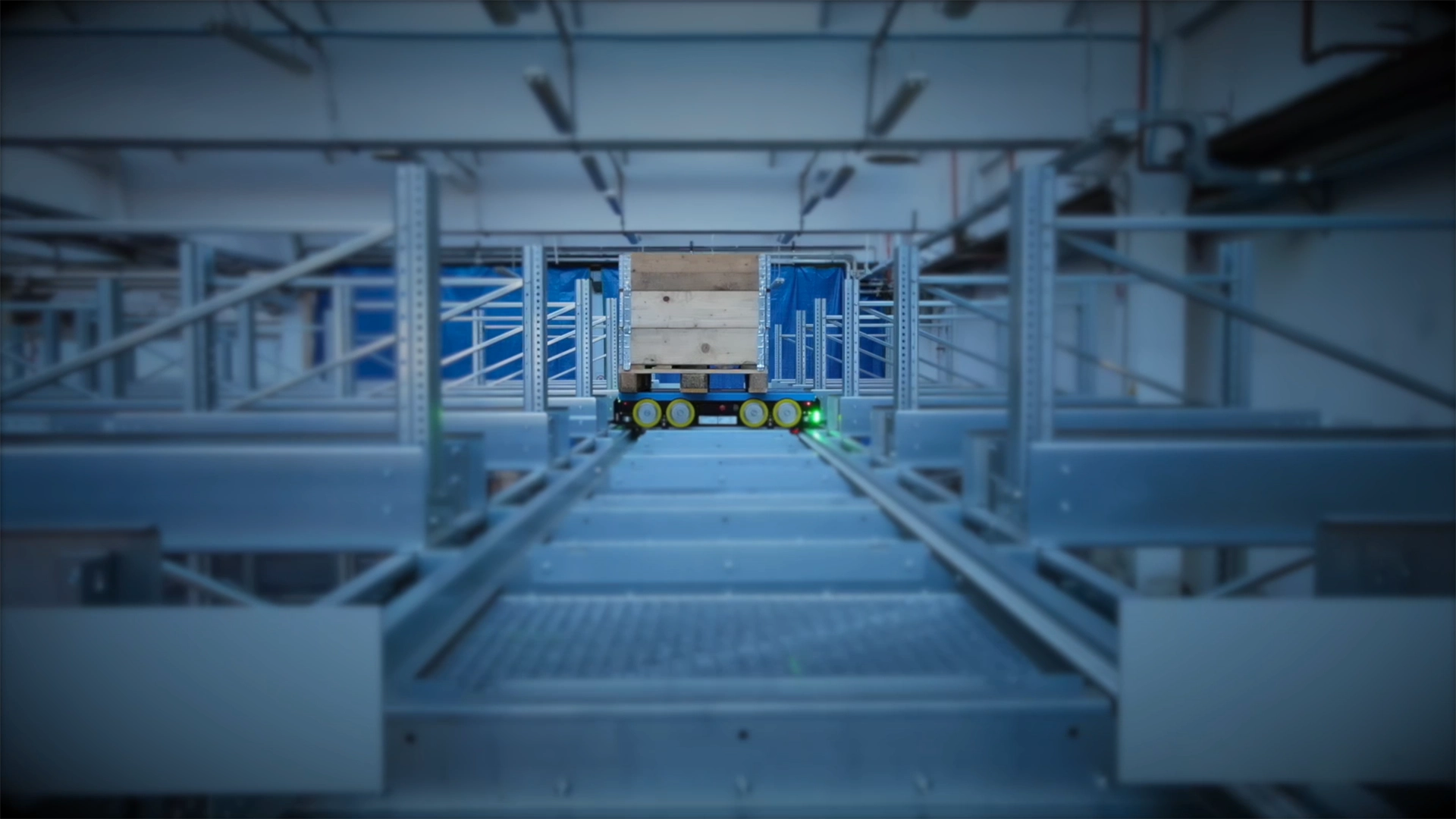
We live in an era characterized by increasing competitive pressure, the spread of e-commerce, and rising demand variability, factors that require companies to handle ever-greater volumes in shorter timeframes. Added to this is the need to accelerate operational processes, optimize space utilization, and ensure greater safety and traceability in logistics operations. These very needs are driving many companies to invest in advanced warehouse automation solutions.
In this context, automation is not just a competitive advantage but becomes a fundamental lever for improving overall efficiency and making the most of available storage capacity. This is where the concept of high-density storage comes into play, namely, the ability to store a large number of pallets in limited space while maintaining speed and accuracy in handling operations.
When specifically discussing high-density pallet storage, one of the most advanced technologies is undoubtedly the pallet shuttle system.
An automated pallet shuttle system is a pallet-handling technology designed to operate within an automated warehouse. The shuttle performs controlled deep-lane storage and retrieval operations with high positioning accuracy, supporting high-density storage configurations and continuous automated operations.
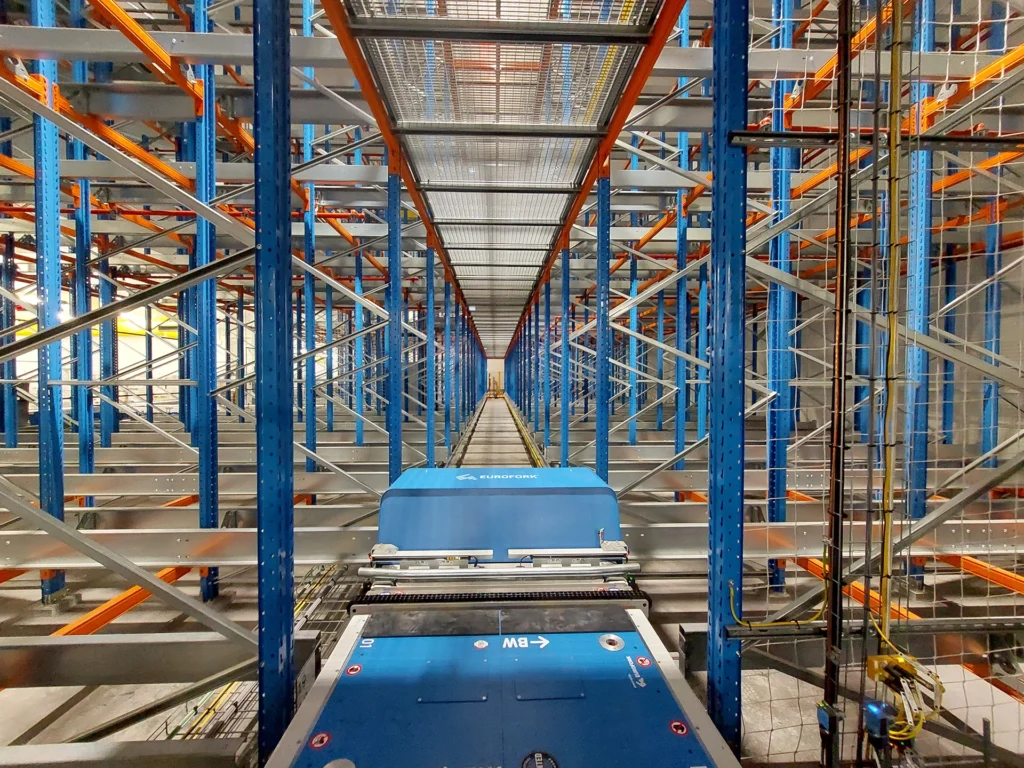
How an Automated Pallet Shuttle Works
The pallet shuttle system is an automated solution designed to operate within a warehouse, both in the main aisles and in high-density storage channels. The device, equipped with advanced sensor systems, automatically performs pallet storage and retrieval operations based on missions generated by the control system (WMS/WCS). Handling takes place along predefined and optimized paths, with precise position management and controlled interaction with other system resources, ensuring high standards of operational efficiency, safety, and logistics traceability.
Typical operations include:
- Pallet entry into the automated system: Pallets are introduced through dedicated bays, usually fed by conveyors, roller tracks, or AGV/AMR vehicles. They are then taken over and placed on a transfer station, where the shuttle identifies them, picks them up, and aligns them correctly for entry into the storage channel.
- Storage: The shuttle system moves inside the channel and, based on WCS commands, deposits the pallet according to the defined operating logic, ensuring optimized allocation in line with warehouse management strategies.
- Pallet retrieval and exit: When requested, the shuttle retrieves the load from the channel and, thanks to its positioning technology, knows its exact location, ensuring speed and efficiency. The pallet is then released at a station defined by the WMS, enabling subsequent operations such as picking or shipping.
- Control and coordination: All activities are managed, monitored, and optimized by WMS and WCS systems, which control logistics flows, supervise mission status, and ensure traceability, efficiency, and operational continuity.
Compared to traditional systems, the automated pallet shuttle enables faster movements, greater safety, and optimal use of available space.
The Main Advantages of an Automated Pallet Shuttle System
The benefits provided by this system are numerous:
- High storage density
- Increased productivity, with continuous 24/7 operating cycles
- Reduction of picking and positioning errors
- Greater safety, by limiting human access to storage areas
- Scalability, with the ability to add shuttles or levels over time
- Reduced operating costs in the medium to long term
- Multi-depth and multi-reference management
These advantages make the automated pallet shuttle an ideal solution for sectors such as food & beverage, automotive, 3PL, chemical and pharmaceutical, industrial manufacturing, fashion, transportation, e-commerce, and retail.
Types of Automated Pallet Shuttle Systems Available on the Market
Over the years, solution providers have designed various versions of automated pallet shuttle systems to meet different operational needs. The main types currently available are:
Semi-automated pallet shuttle
This represents the simplest solution from an operator’s perspective and is often chosen as a first concrete step toward warehouse automation.
In this configuration, the shuttle is positioned inside the racking by a forklift and moves autonomously within the storage lanes. However, pallet loading and unloading at the channel entry are carried out using a forklift.
The system is managed by the operator via a remote control, through which shuttle missions are assigned and monitored, ensuring simple and effective use of the entire installation.
This solution is ideal for companies aiming to maximize storage space and improve operational efficiency while maintaining a relatively low initial investment. It is therefore perfect for those who want to innovate gradually, without immediately committing to full automation of logistics flows.
Automated warehouse with stacker crane and pallet shuttle
In this case, the system combines the use of a stacker crane with shuttle technology within a multi-depth warehouse. The entire installation is managed by a warehouse management system (WMS), which centrally coordinates all automatic handling operations. Pallets designated for storage or retrieval are automatically transferred via conveyors or other transport systems to the inbound and outbound stations. From here, the stacker crane performs vertical and horizontal movements along the aisle, positioning itself at the required level and interfacing with the shuttle on board. The latter enters the storage lane and carries out the deep-lane storage or retrieval of the pallet.
The integration between the stacker crane and the shuttle makes it possible to optimize lane management and fully exploit rack depth, enabling the storage of multiple pallets across several levels while ensuring high storage density, along with high levels of efficiency and operational accuracy.
Fully automated pallet shuttle
In this case, the shuttle is integrated within the racking system and is entirely managed by a Warehouse Control System (WCS) and a Warehouse Management System (WMS), which coordinate all handling operations in line with the company’s ERP logic.
Pallets designated for storage or retrieval are moved automatically using lifting and conveying systems such as elevators, transfer cars (or monorails), and conveyors.
Two main types can be identified:
Mother and child pallet shuttle
The mother and child pallet shuttle is a high-density automated storage system designed for AS/RS warehouses with multi-depth and multi-reference requirements, where high performance, operational continuity, and maximum precision are essential.
The mother and child system consists of two distinct but coordinated units:
- Mother shuttle, which moves along the main aisles and, in specific cases, can change levels via elevators
- Child shuttle (satellite), which operates within multi-depth storage channels, handling pallet storage and retrieval
This architecture allows the separation of longitudinal movements along the main aisles from deep-lane storage operations within the channels, thereby increasing the overall productivity of the system.
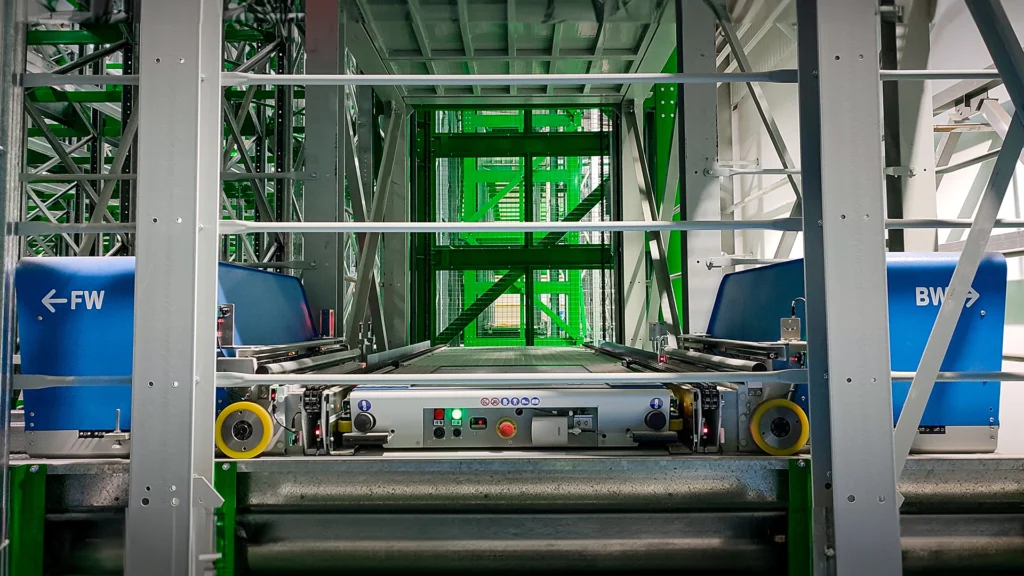
4-way pallet shuttle
The 4-way pallet shuttle is a fully automated, four-way shuttle designed to operate in high-density AS/RS warehouses with a high degree of movement flexibility. This solution represents the most advanced evolution of traditional shuttle systems, as the shuttle can move in all directions without the support of a mother shuttle.
The 4-way pallet shuttle is an omnidirectional autonomous vehicle that can:
- move longitudinally and transversely along the X and Z axes within aisles and storage channels
- move vertically along the Y axis via a lifter
- enter multi-depth storage channels
- change levels via lifters or elevators
This solution is ideal for warehouses with low to medium pallet quantities per SKU and multi-reference management, where multi-depth load handling is required along with maximum storage space optimization, even in buildings with irregular layouts or structural obstacles.
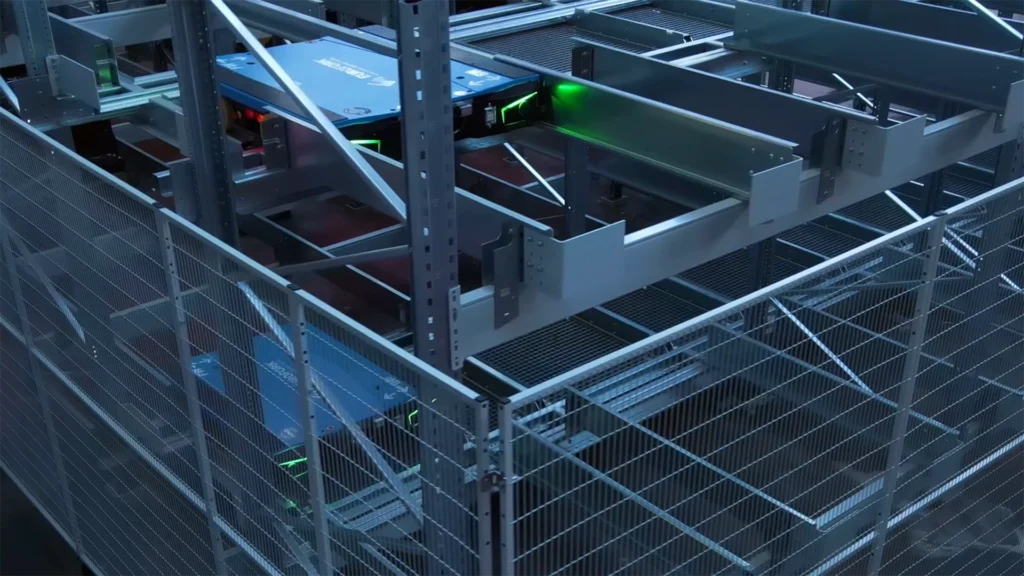
Pallet shuttle for special environments
Some models are designed to operate in extreme conditions, such as:
- Cold storage and frozen environments
- High-humidity environments
- Sectors with strict hygiene requirements
These shuttles use dedicated components to ensure reliability and durability even under complex operating conditions.
Integration with Software and Control Systems
A key element of an automated pallet shuttle system is software management.
The system constantly interacts with:
- ERP systems (Enterprise Resource Planning), with which the WMS integrates and communicates to ensure coordinated and optimized management
- WMS (Warehouse Management System), responsible for managing warehouse logic and operational flows
- WCS (Warehouse Control System), dedicated to controlling and executing automated movements
This integration enables full inventory visibility, pallet traceability, and optimization of logistics flows.
When to Choose an Automated Pallet Shuttle System
An automated pallet shuttle system is particularly suitable when:
- Available space is limited
- There is a need to increase storage capacity
- Pallet flows are repetitive and standardized
- High safety and reliability are required
Before implementation, it is always recommended to carry out an in-depth analysis of flows, volumes, and growth prospects.
In conclusion, the automated pallet shuttle system represents a strategic solution for modern warehouses, capable of combining high storage density, advanced automation, and operational flexibility. Thanks to the various types available on the market, it is possible to configure the system that best fits specific needs, optimizing costs, performance, and space. Investing in this technology means preparing for a more efficient, safe, and competitive logistics future.

Contact Us
To request further information, fill out the form. Our sales department is available to help you with your next intralogistics automation project.