



Warehouse automation
29 January 2026
Automated warehouses in 2026: what they are, how they work, and which solutions increase efficiency
Discover what an automated warehouse is, which goods-handling devices exist, and how they improve speed, safety, and storage density
Indice
Warehouse automation: the perspective of a solution provider
Why automated warehouses have become strategic
AS/RS automated warehouse: what it really means today
Automated warehouse for pallet: handling solutions
Automated warehouse for bins and totes: handling solutions
Intralogistics automation and software
5+1 concrete benefits of warehouse automation
Eurofork as a technology solution provider in handling devices and systems
Warehouse automation: the perspective of a solution provider
When discussing warehouse automation, the most common risk is viewing it as an investment based on complex and little-known technologies, often perceived as having limited applicability and adopted indiscriminately.
In reality, an effective automated warehouse is often the result of careful design, except in cases where an E4CUBE® is applicable, that takes into account specific parameters and, above all, the customer’s needs.
These include inbound and outbound goods flows (warehouse performance), the characteristics of the load units to be handled, goods traceability, ease of restart in the event of a system shutdown, safety, and the system lifespan.
These parameters guide the careful selection of technologies that combine intuitiveness with innovation.
Warehouse management doesn’t end with choosing the automated system and integrated technologies: it includes layout design, material-handling hardware, flow analysis, software integration, and long-term reliability. This combination creates an automated warehouse capable of:
- Optimizing storage volume within the same space
- Reducing operational errors
- Speeding up delivery times
- Ensuring complete traceability of goods
- Increasing productivity
- Providing scalability and operational flexibility
Precisely because of the project’s complexity, choosing reliable System Integrators becomes essential.
In this context, Eurofork is recognized on the market as a solution provider for leading System Integrators worldwide, offering high-performance automated storage solutions that can be integrated into various automated warehouse architectures.
Investing in high-quality internal handling eliminates bottlenecks and maximizes the system’s potential.
Why automated warehouses have become strategic
Growing logistics complexity is making manual storage management increasingly difficult. Today, automated warehouses are strategic hubs for companies: they are assets that help determine market competitiveness through faster order fulfillment, reduced errors, and increased operational activity.
An analysis by GlobeNewswire published in December 2025 indicates that the warehouse automation market is expected to exceed $71 billion by 2033, with growth driven by the adoption of autonomous robots and AS/RS systems.
AS/RS automated warehouse: what it really means today
The term AS/RS (Automated Storage and Retrieval System) refers to a warehouse where the storage and retrieval of load units are handled entirely automatically.
Unlike traditional warehouses, where operations largely depend on human operators and manual equipment, in automated warehouses performance is mainly determined by the hardware technologies used and their level of integration with control and management software.
This approach makes it possible to achieve measurable results in terms of productivity, accuracy, safety, and ROI.
When discussing warehouse automation, it is important to clarify that there is no single model suitable for all needs. There are, in fact, different automated storage solutions that can be combined based on factors such as:
- Type of load unit (pallets, bins, totes, coils…)
- Handling volumes and required cycles per hour
- Building characteristics
- Required storage density
- Level of software integration needed
True warehouse automation therefore stems from a proper initial analysis with the System Integrator and a warehouse layout design aligned with operational goals..
Automated warehouse for pallet: handling solutions
In an automated warehouse, the performance figures stated on paper become reality only when supported by reliable hardware technologies. Reliability, accuracy, and cycles per hour largely depend on the automated storage solutions adopted and their integrated software.
The automated pallet warehouse is one of the most widespread solutions in industrial intralogistics automation. These systems are designed for the automatic handling of unitized pallet loads, offering high load capacity and long-term reliability.
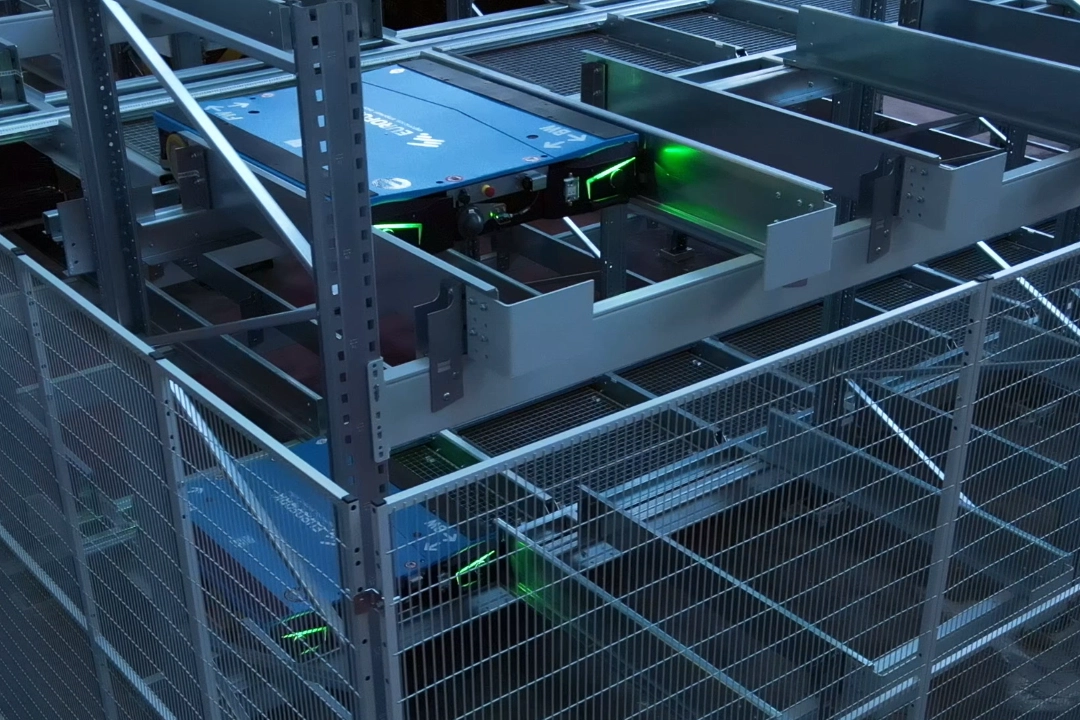
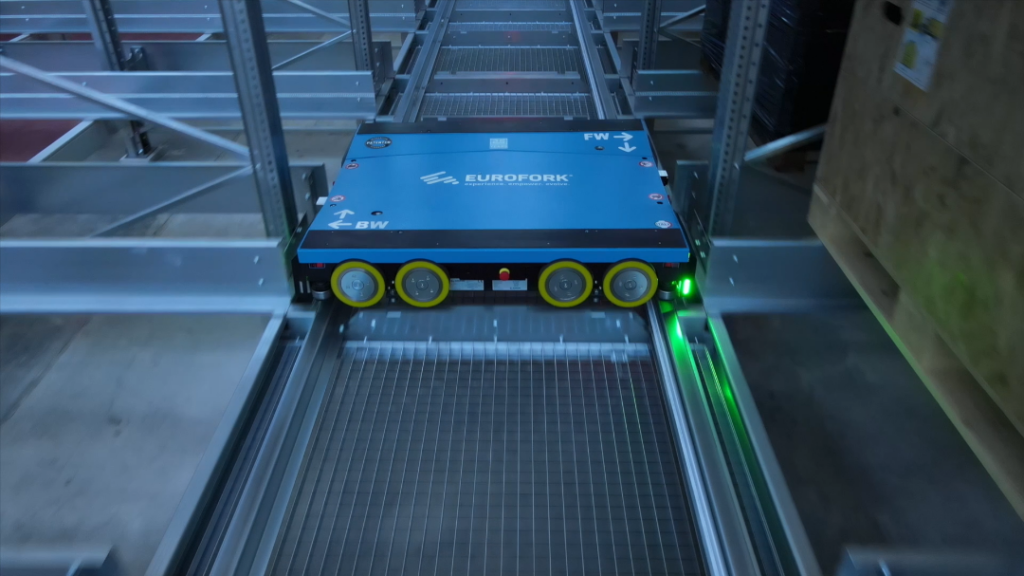
In these systems, goods handling takes place through mother-child pallet shuttle systems, four-way pallet shuttles, or stacker cranes, the latter equipped with load-handling devices known as telescopic forks.
Multi-deep storage solutions, such as double or triple deep telescopic forks or pallet shuttle systems, are designed to maximize storage density by reducing the number of aisles and making the most of the available depth.
The main advantages of an automated pallet warehouse include:
- Reduced storage errors
- Greater safety for operators and goods
- Operational continuity across multiple shifts
- Native integration with warehouse management systems
- Higher storage capacity within the same footprint
- Reduced structural costs
Automated warehouse for bins and totes: handling solutions
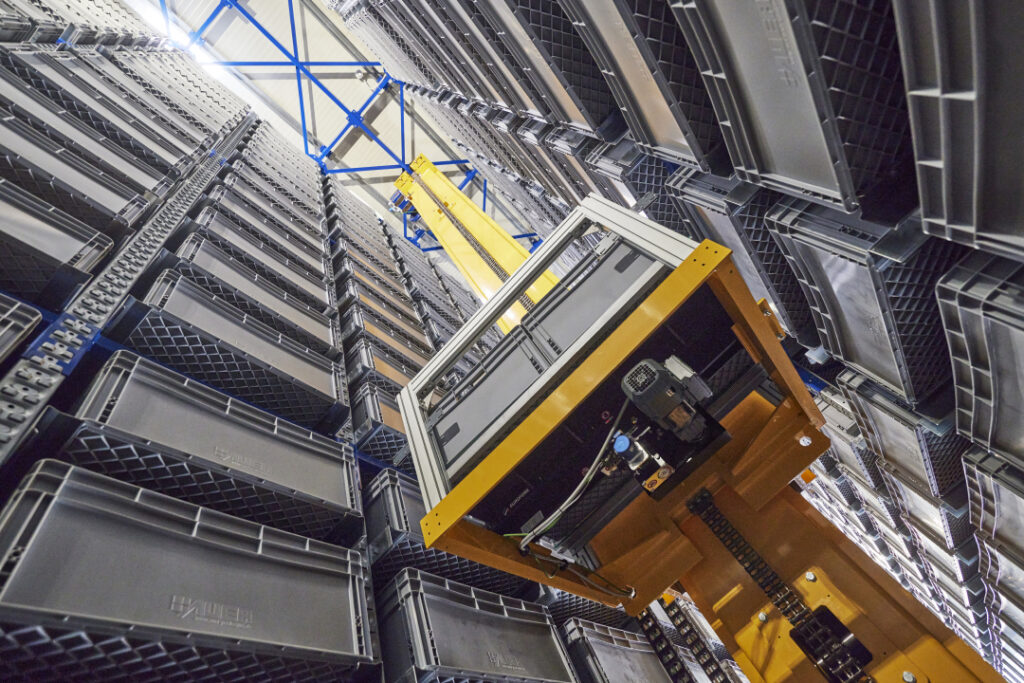
IThe automated warehouse for bins and totes is designed for the high-efficiency handling of carton boxes, plastic crates, or tote boxes, typically used in environments with a high variety of SKUs and intensive picking flows.
This type of automated warehouse is widespread in the retail, e-commerce, food, pharmaceutical, and manufacturing sectors.
The main advantages of an automated tote warehouse include:
- high storage and retrieval speed
- reduced picking errors
- optimized storage space
- improved traceability of handled load units
- effective integration with goods-to-person systems
From a warehouse automation perspective, the most common handling solutions within these facilities include telescopic forks on stacker cranes for boxes, multi-deep pallet shuttle systems, and automated conveyors. In these systems, precision in tote positioning and the reliability of storage&retrieval devices are critical elements for ensuring operational continuity.
Material handling solutions developed by Eurofork, such as telescopic forks and high-performance miniload handling devices, help improve the speed and reliability of automated tote warehouse systems by supporting intensive cycles and reducing mechanical wear over time.
Eurofork’s complete range of material handling solutions plays a key role, enabling system integrators to deliver high-performance handling systems capable of ensuring millimeter-level positioning precision and high cycles per hour.
Intralogistics automation and software
An automated warehouse cannot function without deep integration between hardware and software. Material handling devices are integrated with the company’s management system through WCS (Warehouse Control System) software, which interfaces with the WMS (Warehouse Management System), in turn connected to the company’s ERP systems.
In this way, throughputs, priorities, and operational sequences are integrated into a smooth and reliable flow aligned with business logic.
EXA is Eurofork’s advanced WCS software platform, designed to manage pallet shuttle systems such as E4SHUTTLE and ESMARTSHUTTLE®.
Thanks to intuitive controls and robust features also supported by artificial intelligence technology, EXA redefines warehouse management by providing unprecedented control and optimization for seamless and efficient operations.
With Eurofork’s WCS, available in different versions, it is possible to achieve:
- Advanced simulation of logistics systems, optimizing the commissioning process and increasing operational efficiency
- Full traceability of load units and machines
- Reduced operational anomalies
- Predictive maintenance through the collection and analysis of Big Data
- Precise, real-time monitoring of intralogistics activities, optimizing workflow
- Web-based accessibility and an advanced HMI interface
5+1 concrete benefits of warehouse automation
Warehouse automation delivers measurable benefits across the entire logistics value chain.
Among the main advantages are:
- Increased storage capacity within the same footprint
- Higher cycles per hour thanks to intensive performance
- Greater precision in load positioning
- Enhanced goods traceability
- Reduced operating costs in the medium to long term
- Improved workplace safety
Designing an Automated Warehouse: Critical Aspects
Designing an automated warehouse requires a long-term vision. It is not just about selecting a technology, but about building a scalable system that can adapt to future business developments.
Key critical aspects to consider include:
- Analysis of current and future flows
- Definition of logistics KPIs
- Selection of material handling technologies
- Integration with existing information systems
One of the most common mistakes in warehouse automation projects is underestimating the importance of details. Positioning precision, load stability and durability are elements that make the difference between a high-performing facility and one that generates bottlenecks. Precisely because of the project’s complexity, it is essential to rely on a dependable System Integrator..
Eurofork as a technology solution provider in handling devices and systems
Within an automated warehouse, the difference between a theoretically efficient system and one that is truly high-performing becomes evident over time. Eurofork collaborates with leading System Integrators worldwide, operating as a solution provider of highly efficient automated material handling solutions that can be integrated into various automated warehouse architectures.
Investing in high-quality material handling solutions ensures that the entire automated warehouse system can perform at its full potential.
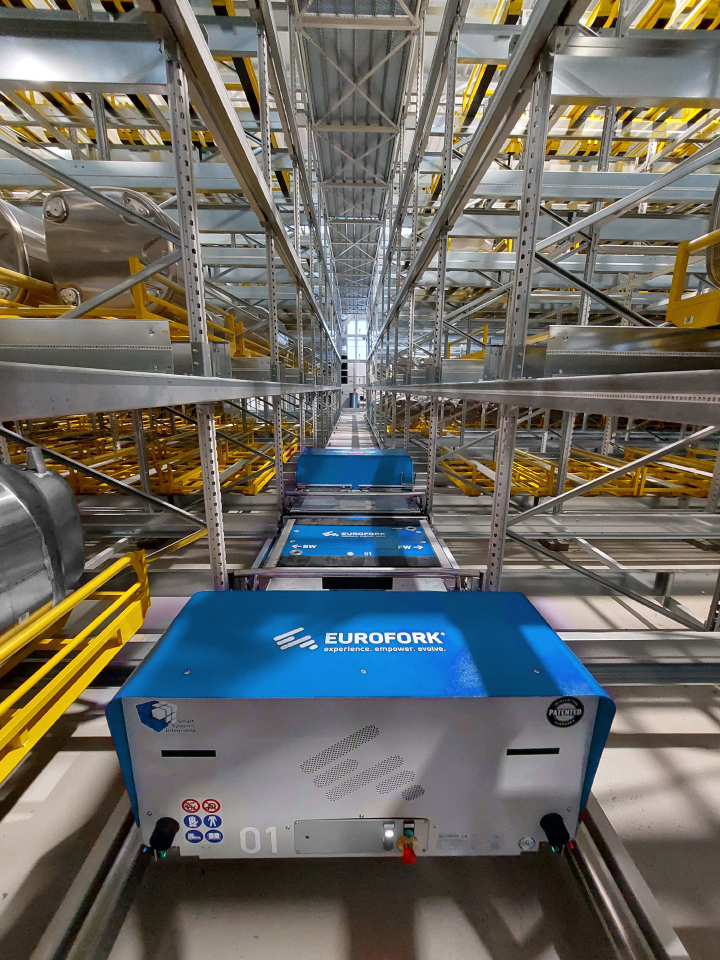
Eurofork’s telescopic forks, ESMARTSHUTTLE® mother-daughter pallet shuttle systems, the E4SHUTTLE four-way pallet shuttle, and the EXA WCS platform are designed to guarantee high operational standards within automated warehouse systems. This approach enables System Integrators to design automated warehouses for their customers that are truly sustainable in the long term.
The warehouse automation solutions developed by Eurofork help make automated warehouse systems more reliable, precise, and safe, supporting warehouse management focused on operational continuity and future growth.

Contact Us
To request further information, fill out the form. Our sales department is available to help you with your next intralogistics automation project.