



Warehouse automation
1 July 2026
TELESCOPIC FORKS FOR AS/RS: SOLUTIONS FOR WAREHOUSE AUTOMATION AND PALLET HANDLING
DISCOVER HOW TELESCOPIC FORKS FOR AS/RS SYSTEMS IMPROVE WAREHOUSE AUTOMATION, PALLET HANDLING, AND LOGISTICS EFFICIENCY.
TELESCOPIC FORKS FOR AS/RS: THE KEY TO WAREHOUSE AUTOMATION
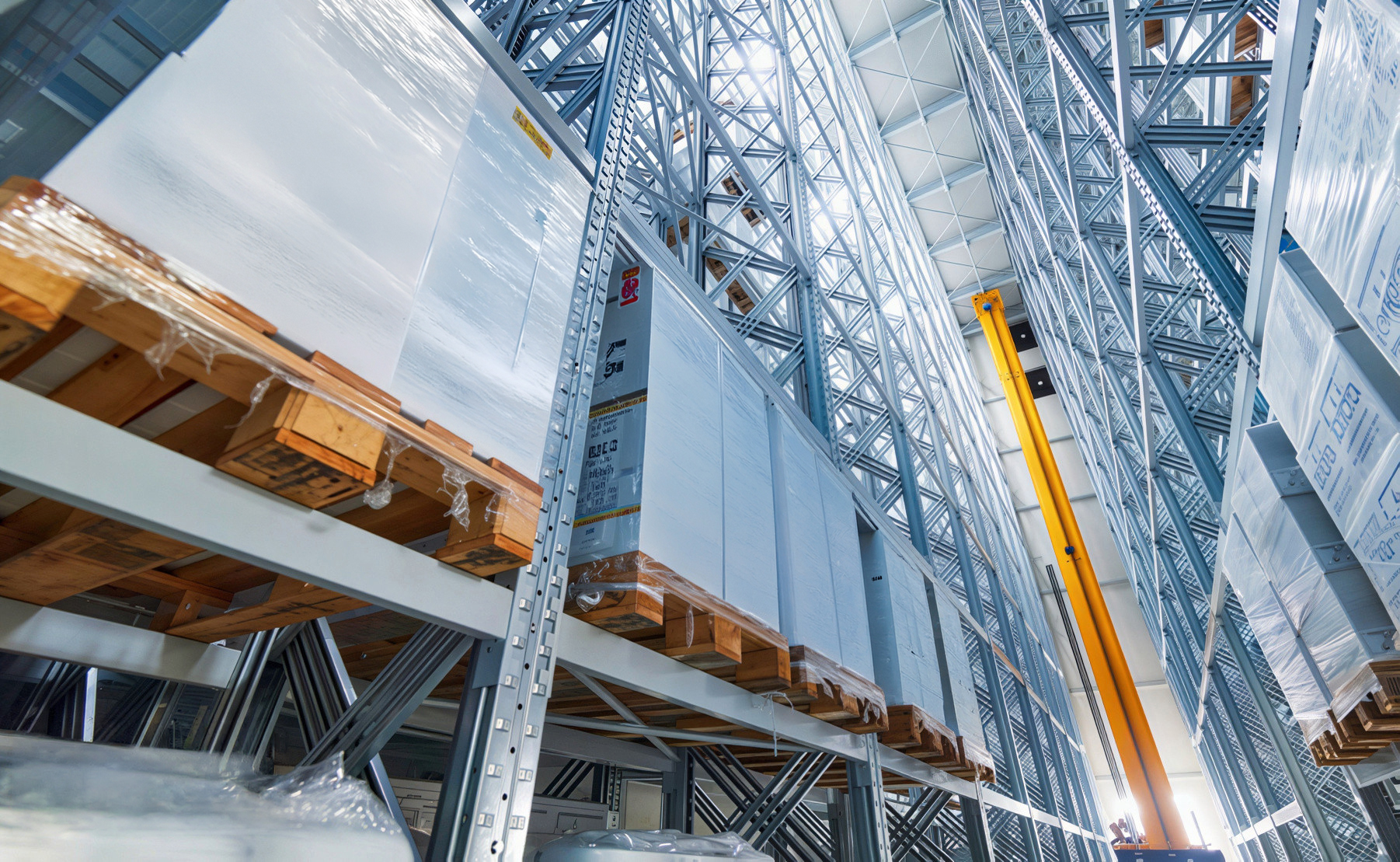
In the field of intralogistics, warehouse automation has become an essential step to ensure operational continuity, space optimization, and increased efficiency. In this context, telescopic forks for AS/RS systems stand out as an enabling technology for pallet handling within high-density automated systems.
These devices, designed to operate with precision and reliability, play a central role in modern automated storage facilities, directly contributing to the overall performance of the warehouse.
WHAT ARE TELESCOPIC FORKS
Telescopic forks are load-handling systems designed to extend and retract in a controlled manner, allowing the pickup and placement of various types of load units such as pallets, containers, or industrial components. They are typically used in AS/RS (Automated Storage and Retrieval Systems), where they are installed on stacker cranes or shuttles to perform fast, repetitive operations with high precision.
Their application is not limited to traditional automated warehouses. Telescopic forks are also widely used in industrial settings, such as production lines where handling load units requires continuity, safety, and control. The bidirectional telescopic motion allows them to reach storage positions smoothly, ensuring stability even under intensive operating conditions.
THE ROLE IN AS/RS SYSTEMS
Within automated warehouses, telescopic forks represent the point of contact between the transport system and the racking. Their function is to transfer load units accurately and reliably, contributing both to space optimization and to the reduction of cycle times.
The quality of their movement, their ability to handle loads at different depths, and their positioning accuracy all have a direct impact on the efficiency of the entire system. In this sense, telescopic forks are not merely mechanical components, but strategic elements for the full automation of the warehouse.
CONFIGURATIONS BASED ON STORAGE DEPTH
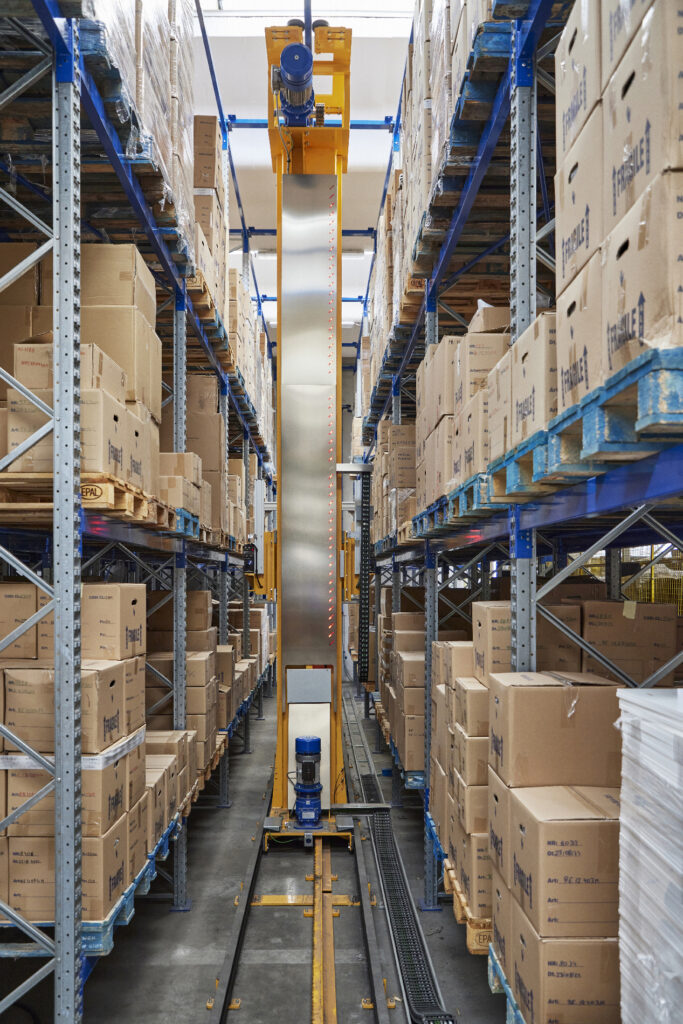
A key factor in the design of telescopic forks for AS/RS systems is the operating depth, which directly determines storage capacity and warehouse organization. The choice between single, double, or triple-deep configurations is not just a technical variable, but a design lever that affects density, performance, and the overall cost of warehouse automation.
Single-deep forks represent the most common and well-established configuration for pallet handling. They are characterized by a structure consisting of a fixed base and two mobile telescopic elements, designed to reach only the first storage position in the racking. This architecture ensures high structural rigidity, positioning accuracy, and fast operating cycles. For these reasons, single-deep forks are particularly suitable for high-throughput environments, where speed and repeatability are critical factors.
Double-deep forks offer a higher level of space optimization, making it possible to reach the second storage position within the racking. From a design perspective, they consist of a fixed base and three telescopic elements, with a synchronized movement system that ensures stability even at extended reaches. This configuration significantly increases storage capacity without expanding the warehouse footprint, providing an effective balance between density and accessibility.
Alongside the standard version, a dual-drive configuration is also available, designed to further optimize structural costs in AS/RS automated warehouses. In this variant, each motor independently manages the extension elements based on the required depth, enabling more efficient load handling.
The result is a reduction in the size of moving components, both in single- and double-deep operations, which also leads to a decrease in the overall height of the moving assemblies.
Triple-deep forks represent the most advanced solution in terms of volumetric space utilization. Designed to operate across three storage depths, they enable maximum storage density and are particularly well-suited for environments where space is limited or expansion costs are high.
Their structure is more complex and requires careful management of mechanical stresses, especially during full extension. Nevertheless, thanks to the use of high-performance materials and advanced control systems, they maintain high levels of precision, safety, and stability.
SPECIALIZED SOLUTIONS FOR EVERY TYPE OF LOAD AND INDUSTRY
The widespread use of telescopic forks is linked to their ability to adapt to a wide range of production environments. The handling of pallets and other load units is, in fact, a cross-industry requirement that involves sectors such as automotive, tire manufacturing, paper, batteries, food & beverage, pharmaceuticals, ceramics, e-commerce, and distribution logistics.
This versatility is made possible through customized design, which allows telescopic forks to be tailored to specific operating conditions, types of loads, and environmental constraints. The result is a flexible solution capable of delivering reliable performance even in complex or highly specialized contexts.
MINILOAD AND LIGHT LOAD HANDLING
In the context of high-speed logistics, particularly in the e-commerce and distribution sectors, Miniload systems provide an effective solution to the need to handle large volumes of lightweight load units within short timeframes.
From a design standpoint, Miniload forks feature compact dimensions and lightweight yet durable materials, enabling high acceleration and extremely short cycle times. Positioning accuracy is a critical aspect, especially when handling bins or tote boxes, where tight tolerances are essential to ensure proper load pickup and release.
Like telescopic forks for pallets, Miniload solutions are available in both single- and double-deep configurations. These configurations follow principles similar to pallet systems: single-deep solutions are designed for fast and direct operations, while double-deep versions allow for increased storage density without compromising performance.
A particularly interesting aspect of Miniload systems is their ability to handle multiple load units within the same operating cycle. This capability is made possible by the integration of a single or double conveyor, which helps optimize logistics flows and reduce warehouse throughput times.
In more advanced applications for handling boxes and bins, the forks can be equipped with side gripping systems and adjustable center distances, allowing them to dynamically adapt to different formats. This level of flexibility is essential in high-variability environments, where the same system must manage products with different sizes and characteristics.
Overall, Miniload solutions represent a highly specialized extension of telescopic forks, designed to maximize speed, precision, and storage density within increasingly performance-driven warehouse automation systems.
SPECIALIZED SOLUTIONS FOR EVERY TYPE OF LOAD
Telescopic forks stand out for their strong ability to adapt to a wide range of application contexts, thanks to solutions specifically designed to meet distinct industrial requirements. This level of customization makes it possible to optimize not only the handling of load units, but also the entire warehouse automation system.
In the automotive sector, telescopic forks are engineered to handle complex components such as car bodies and structural vehicle parts. These are particularly demanding applications, where it is essential to ensure high load stability, resistance to heavy mechanical stress, and continuous operation even under the most intensive cycles. Automotive forks are distinguished by their high reliability, ease of maintenance, and complete customization.
In the tire industry, requirements are different but equally challenging. Forks designed for this sector are built to handle non-standard loads, such as tires of varying sizes and characteristics. Their key feature is a cross-section structure, which significantly improves load stability during handling. In addition, the upper extension can be customized according to the type of tire, optimizing storage space and reducing the risk of operational errors.
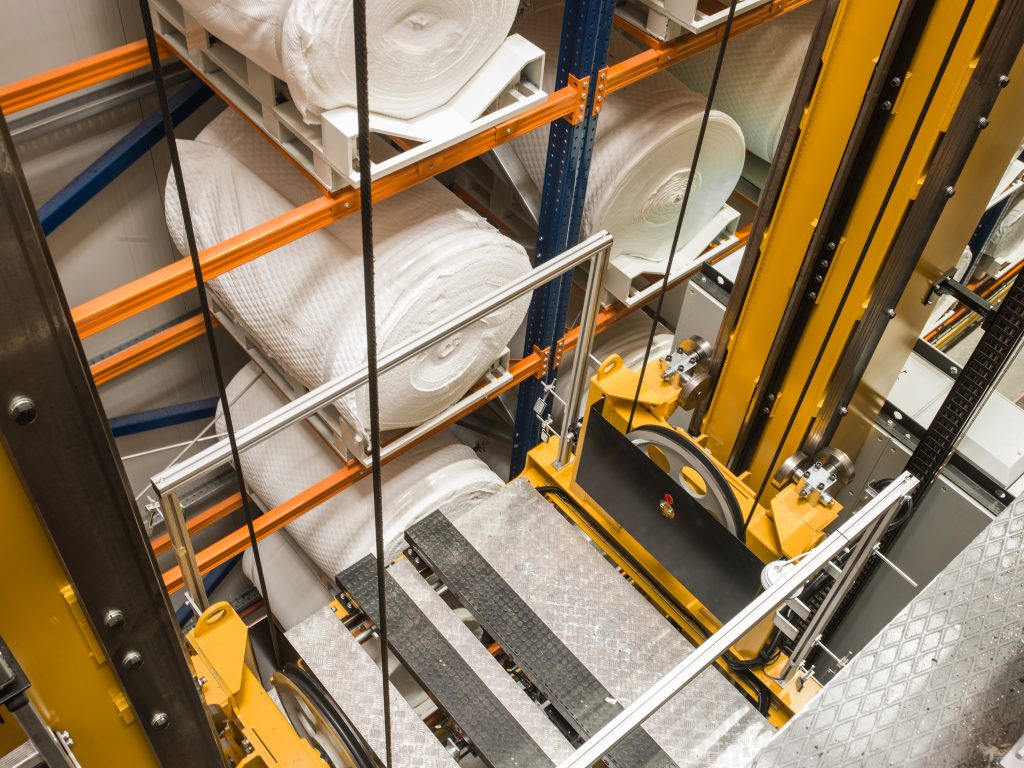
When it comes to rolled materials such as paper, textiles, or steel, dedicated solutions for cylindrical load handling come into play. In these cases, the forks are designed with specific supports applied to the extension or with the option to tilt the entire structure, increasing the contact surface and distributing stress more effectively. This approach ensures maximum load protection, greater stability, and precise handling, regardless of the coil’s diameter or orientation.
In the lithium battery sector, an area becoming increasingly strategic with the growth of e-mobility, telescopic forks are designed to meet particularly stringent requirements in terms of safety, precision, and reliability. Each solution is developed according to the operating environment and load type, with the possibility of integrating technical features to eliminate any electromagnetic interference.
Finally, for handling extremely heavy or bulky loads, advanced configurations are developed, such as systems that combine multiple forks into a single unit. This approach creates multiple contact points, ensuring even weight distribution and enhancing the overall stability of the load.
SPECIALIZED SOLUTIONS FOR EVERY TYPE OF LOAD
In addition to standard applications, telescopic forks can also be developed in highly specialized configurations designed to meet the most complex operational requirements.
Special forks, for example, are engineered to operate in particularly challenging conditions, such as environments with extreme temperatures, high humidity, or industrial contexts involving non-conventional loads. In these cases, every component is custom designed to ensure reliable performance over time, minimizing wear and ensuring operational continuity even in the most demanding situations. The possibility of full customization allows each solution to be tailored to real application needs, while consistently maintaining high levels of efficiency.
Another example of flexibility is represented by variable distance between forks, developed to dynamically handle load units of different sizes. Thanks to the ability to adjust the distance between the forks, these solutions can quickly adapt to varying formats, increasing system versatility and optimizing the use of available warehouse space.
INTEGRATED SYSTEMS: BEYOND TELESCOPIC FORKS
Telescopic forks are not merely load-handling devices; they can become key components within a fully integrated intralogistics system. By combining them with advanced conveying technologies, it is possible to create fully automated and highly efficient material flows.
Among the most widely used solutions are Chain Conveyor Systems, which are ideal for handling pallets and heavy loads. In these systems, transportation is carried out by chains that ensure robustness, reliability, and the ability to manage high loads even in intensive production environments.
Alongside these, Belt Conveyor Systems represent a more suitable solution for lighter or more delicate loads. Belt-based transport ensures smooth movement and more controlled handling of load units.
THE 5.0 EVOLUTION OF TELESCOPIC FORKS
Telescopic forks are evolving into a new generation of intelligent solutions, designed to provide increasingly advanced support for modern intralogistics.
Thanks to the integration of IoT sensors, these technologies are capable of continuously monitoring their operating status, collecting valuable data to optimize performance over time. Continuous monitoring and real-time data analysis enable full control over system operations.
One of the most innovative aspects is predictive maintenance, which makes it possible to identify potential issues before they turn into failures or downtime. This proactive approach helps improve system reliability and reduce operating costs.
The goal is to ensure a consistently efficient workflow, minimizing interruptions and taking warehouse automation to the next level, where technology and performance work in perfect synergy.
CONCLUSION
In conclusion, telescopic forks represent a key element in intralogistics automation, contributing significantly to the transformation of warehouses into increasingly efficient and scalable systems. While they are not the only solution available, their design versatility, ability to adapt to different types of loads, and capacity for integration with advanced technologies make them highly effective in optimizing every stage of pallet handling. In an environment that is increasingly driven by digitalization and data-oriented approaches, their evolution toward intelligent and connected configurations further strengthens their role within logistics systems. This enables companies to enhance operational performance, reduce costs, and effectively address the challenges of the logistics landscape of the future.
Contact Us
To request further information, fill out the form. Our sales department is available to help you with your next intralogistics automation project.