



Warehouse automation
17 June 2026
AUTOMATED PALLET SHUTTLE SYSTEM | EFFICIENCY, FLEXIBILITY, AND SPEED
DISCOVER HOW THE AUTOMATED PALLET SHUTTLE SYSTEM IMPROVES WAREHOUSE EFFICIENCY, OPTIMIZES SPACE, AND HANDLES DIFFERENT TYPES OF LOADS WITH MAXIMUM PRECISION.
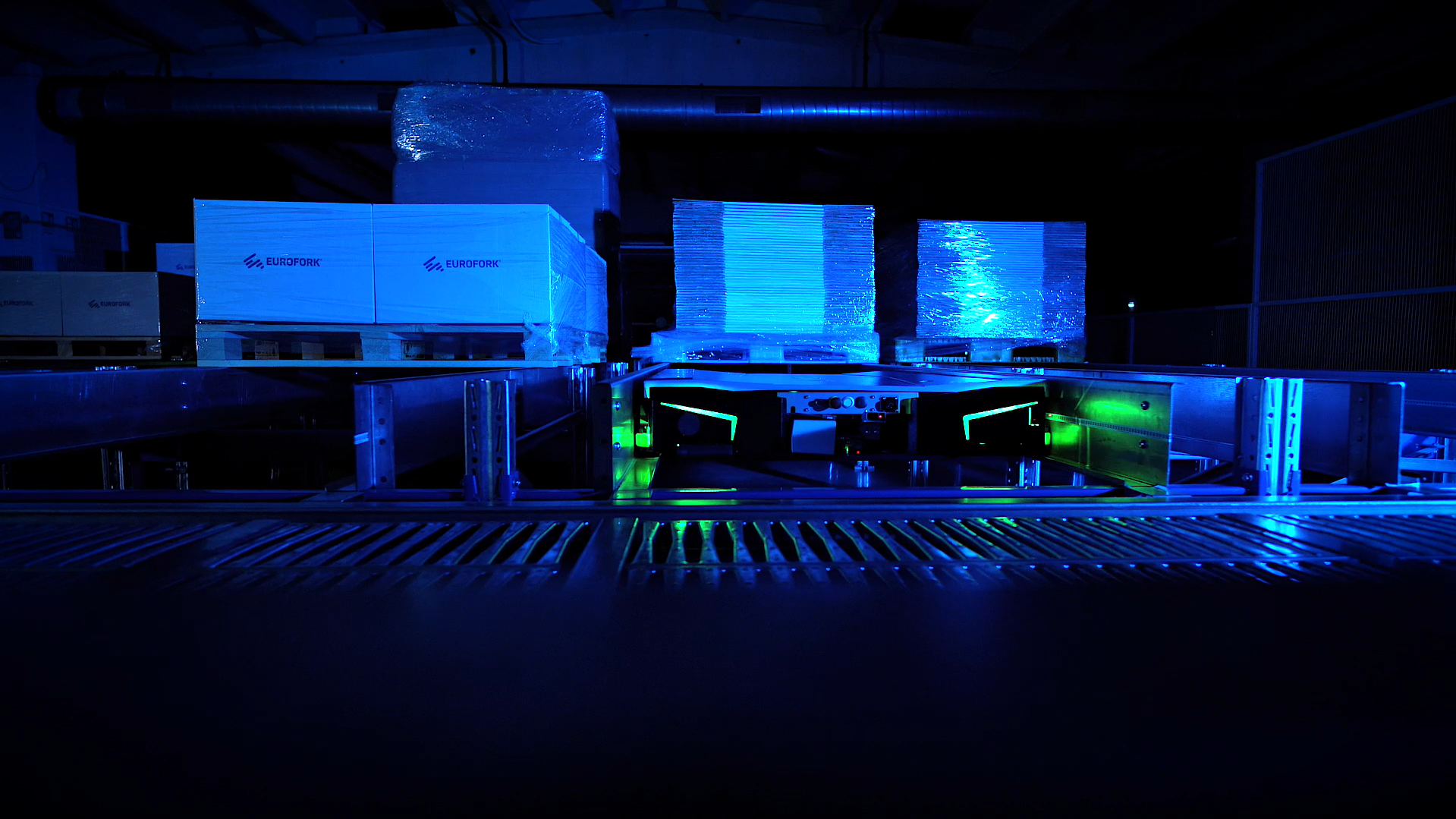
WHAT IS THE PALLET SHUTTLE SYSTEM AND WHY IT IS BECOMING INCREASINGLY WIDESPREAD
The pallet shuttle system is now one of the most advanced solutions for handling pallets within warehouses. In a context that is increasingly oriented towards automated logistics—where efficiency, reliability, and space optimization are key factors—this technology enables a significant improvement in operational performance.
Thanks to its flexible and highly customizable design, the pallet shuttle can adapt to different logistical needs, ensuring operational continuity and a high level of integration with business processes.
FLEXIBILITY AND ADAPTABILITY IN PALLET HANDLING
One of the key distinguishing features of the pallet shuttle system is its ability to handle a wide variety of pallets. It is not a standard solution, but rather a configurable system designed based on specific operational requirements.
During the automated warehouse design phase, fundamental parameters are defined, such as load weight, pallet dimensions, and the structural characteristics of the load units. This approach ensures perfect integration with the logistics flow and guarantees efficient and continuous handling operations, with the possibility of customizing the machines according to customer requirements.
LOAD CAPACITY AND OPERATIONAL SAFETY
From a performance standpoint, the pallet shuttle is designed to handle loads typically ranging between 1.5 and 2 tons, making it suitable for a wide range of industrial applications. However, load capacity is not the only relevant factor.
Great attention is also paid to the stability of the handled units, placement accuracy, and operational safety. These elements are essential to ensure reliable long-term operation and to minimize the risk of downtime or inefficiencies.
MOTHER-DAUGHTER SYSTEMS AND 4-WAY PALLET SHUTTLE
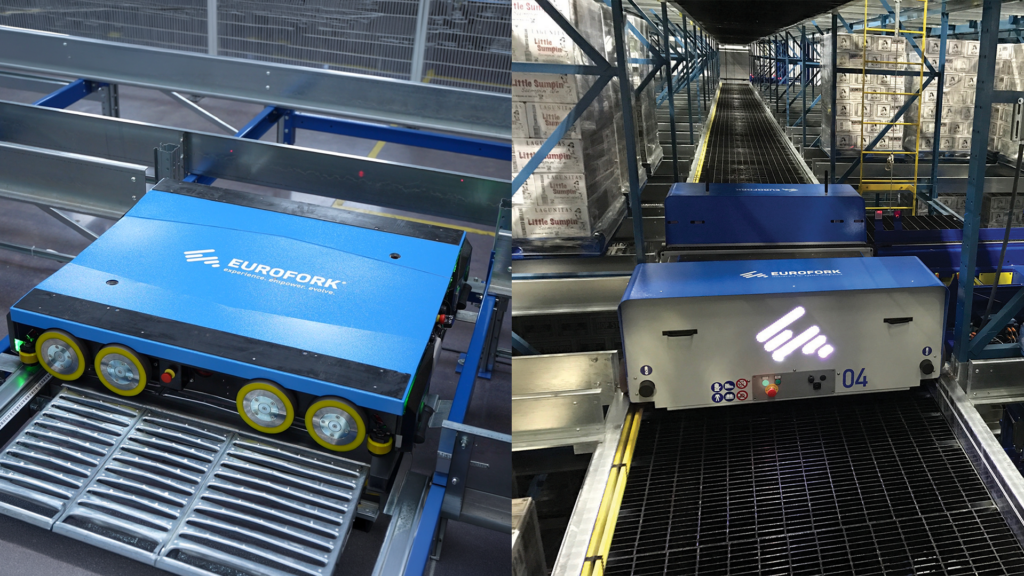
More advanced solutions, such as mother-daughter systems and 4-way pallet shuttles, further expand the capabilities of this technology. These systems can handle both standard pallets and heterogeneous loads, adapting to various industrial sectors such as food & beverage, Ho.Re.Ca., pharmaceuticals and chemicals, automotive, e-commerce and retail, 3PL, and manufacturing.
Unlike traditional bidirectional shuttles, the 4-way pallet shuttle can move not only along the aisles but also transversely between them and across different levels, thanks to integrated lifting systems. This feature eliminates the need for additional equipment for aisle or level changes.
The result is a highly flexible and scalable storage system, capable of quickly adapting to fluctuations in demand and supporting advanced and dynamic logistics layouts.
HANDLING SPECIAL LOADS AND ADVANCED APPLICATIONS
The pallet shuttle system also stands out for its ability to handle non-conventional types of loads. In some configurations, for example, it is possible to move drums without palletization, simplifying operations and reducing manual or semi-automated handling.
In the food sector, the system can also be used for bulk loads without pallets or complex packaging, thanks to the use of specially designed structures and specific materials such as stainless steel, which ensure resistance to cleaning cycles and compliance with hygiene and safety regulations.
Its versatility also extends to the handling of specific materials such as paper reels, car bodies, or heavy components, which require high precision and stability during operations.
OPERATIONAL SPEED AND LOGISTICS FLOW OPTIMIZATION
The speed of the pallet shuttle is designed to ensure smooth, consistent, and repeatable movements, rather than focusing solely on peak performance. This approach makes it possible to maintain an optimal balance between productivity, precision, and safety.
The operating speed is calibrated according to the type of load and the specific requirements of the warehouse, helping to reduce errors, limit structural stress, and optimize the entire logistics flow.
Special attention is also given to the development and design phase of PLCs: technicians focus on accurately defining acceleration and deceleration ramps, which are essential to ensure efficient, safe, and long-lasting machine operation.
ADVANTAGES OF THE PALLET SHUTTLE SYSTEM FOR AUTOMATED WAREHOUSES
Adopting an automated pallet shuttle system allows companies to significantly improve and speed up warehouse management. The combination of flexibility, load capacity, and consistent performance makes it an ideal solution for addressing the challenges of modern logistics, where the real objective is to reduce the waiting time for products requested by the end user.
It is a technology that enables space optimization, increases operational efficiency, and ensures high reliability over time. All of this translates into a tangible improvement in business competitiveness, with a reduction in return on investment (ROI) times and concrete support for the company’s financial growth.
CONCLUSION: A STRATEGIC CHOICE FOR MODERN LOGISTICS
The automated pallet shuttle system represents a strategic solution for companies aiming to evolve toward a more efficient and automated logistics model. Thanks to its versatility and ability to adapt to complex environments, this technology delivers tangible benefits in terms of productivity, process control, and long-term sustainability.

Contact Us
To request further information, fill out the form. Our sales department is available to help you with your next intralogistics automation project.