



Warehouse automation
13 May 2026
Internal logistics problems: the most common inefficiencies in warehouses
Explore the main challenges of internal logistics and learn how automated intralogistics solutions can effectively tackle them in automated warehouses.
.
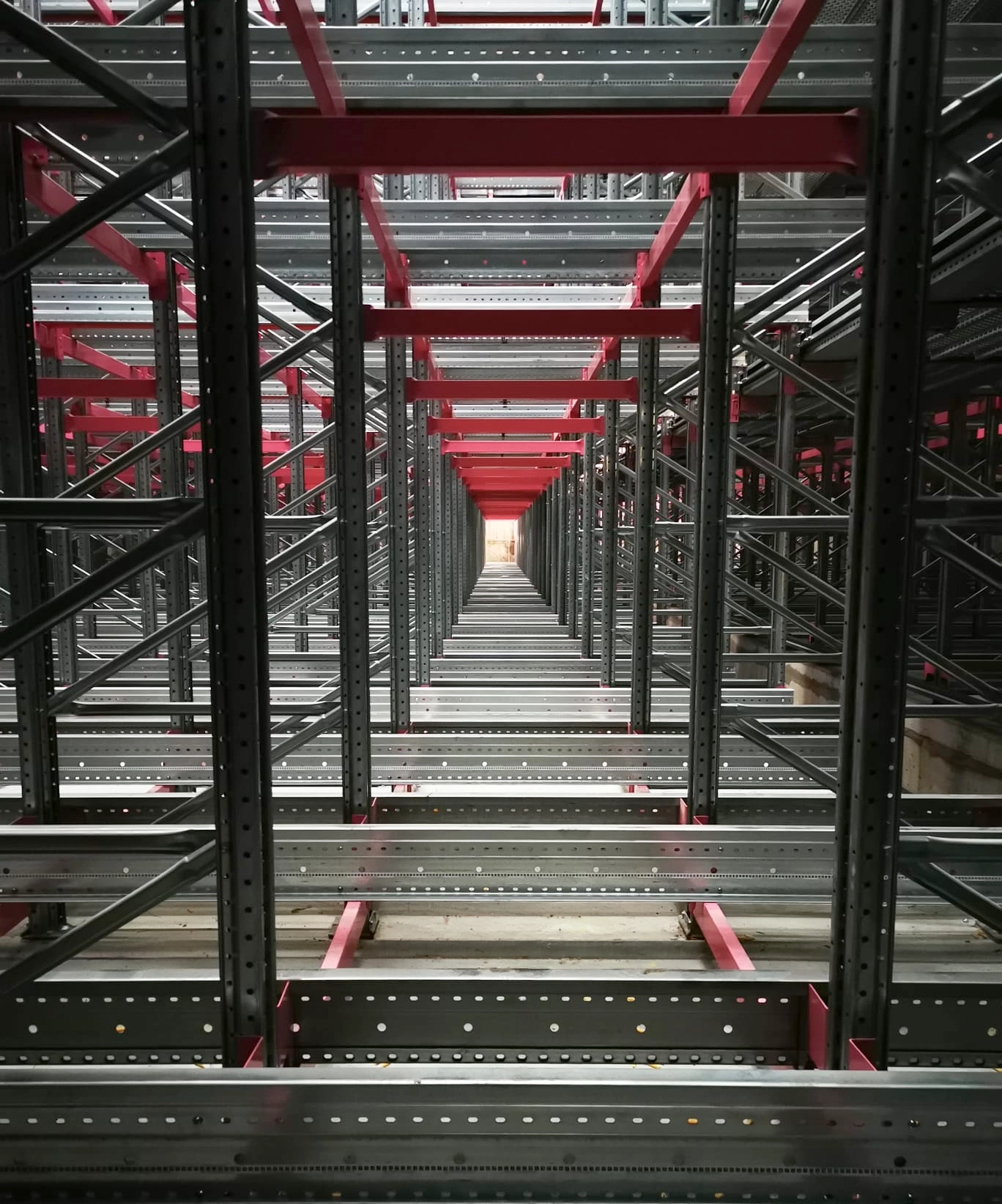
In intralogistics, the internal management of warehouse operations, even small inefficiencies can escalate into major operational challenges. According to a study by the Warehousing Education & Research Council (WERC), inefficient warehouse practices can account for a loss of 6% to 12% of annual revenue in medium-to large-scale operations.
As a result, delays, errors, and bottlenecks in internal logistics processes generate significant economic losses. It is therefore understandable that companies are motivated to identify reliable solutions aimed at eliminating operational inefficiencies.
At the same time, growing logistical complexity makes manual flow management increasingly difficult. Today, automated warehouses have become strategic hubs for businesses, driving competitiveness through faster order fulfillment, fewer errors, and higher productivity.
An analysis by GlobeNewswire published at the end of 2025 estimates that the warehouse automation market will exceed USD 71 billion by 2033, driven primarily by the adoption of autonomous robots and AS/RS systems (automated storage and retrieval systems).
In this scenario, gaining a deep understanding of the most common internal logistics issues, and knowing how modern automated material-handling solutions can address them, becomes essential both for System Integrators designing facilities and for End Users managing warehouse operations.
What are the main inefficiencies in automated warehouses, and how can they be resolved?
Inefficient pallet handling and operational errors
Inefficient movement of goods within the warehouse is often the root cause of slowdowns, product damage, and additional operational costs.
Errors of this kind can result in unexpected downtime that may last for several days.
Likewise, manual processes frequently lead to picking and put-away errors: a pallet stored in the wrong location or an item picked incorrectly results in incorrect shipments, costly returns, and additional rechecking activities. Industry estimates indicate that picking errors can translate into losses of up to nearly USD 400,000 per year for an average distribution center. Beyond the direct financial impact, every error undermines customer trust and damages the reputation of the logistics service.
Another critical aspect is safety: when internal material handling is carried out in a disorganized manner or with inadequate equipment, the risk of workplace accidents increases. For example, forklift-related incidents can cause serious injuries to operators. In the United States, forklifts are involved in approximately 85 fatalities and 34,000 serious injuries every year.
Choosing automation systems, particularly those for automated material handling, eliminates human variability in repetitive tasks, reduces errors, protects goods, and enhances worker safety.
Long retrieval times and bottlenecks in material flows
Another very common internal logistics issue is slow picking and order processing. Excessively long times to manually handle an order, including picking and put-away operations, can lead to missed sales opportunities and delivery delays, ultimately compromising customer satisfaction.
The causes of these inefficiencies in material flows can vary:
- an unoptimized warehouse layout forces excessively long travel times for goods and/or operators
- outdated or non-integrated IT systems create waiting times
- a low level of automation limits the speed at which storage and picking activities can be completed
A key element is the order cycle time, defined as the interval between order receipt and shipment. Differences in order processing times within the facility can be caused by internal bottlenecks, such as a single overloaded loading dock or automated material-handling systems that are not always reliable.
These inefficiencies drastically limit productivity (orders processed per hour) and reduce flexibility in handling workload peaks.
In the era of e-commerce and just-in-time supply chains, slowness is not an option: if the warehouse takes too long to process orders, the company risks losing customers or having to spend more on expedited shipping.
What solutions are available to address this issue? To speed up retrieval times and eliminate bottlenecks, it is necessary to act on process organization and introduce targeted automation where it is needed. From a technological standpoint, the implementation of automated intralogistics solutions makes it possible to significantly increase the speed of material-handling operations. In AS/RS (Automated Storage and Retrieval System) environments, solutions such as telescopic forks for stacker cranes and automated shuttles can operate 24/7 at consistent rates. For example, a multi-depth pallet shuttle system like ESMARTSHUTTLE® is capable of performing thousands of double cycles per hour (with simultaneous storage and retrieval operations), figures that are unthinkable for other material-handling solutions.
Low storage density and unused space
Many warehouses suffer from low storage density: in other words, they do not fully exploit the available physical space, especially vertically.
Excessively wide aisles, racking systems that fail to take advantage of the full height of the facility, or simply a suboptimal layout of goods mean that a significant portion of the warehouse’s volume remains unused.
The result is wasted logistics space, which has two immediate consequences:
- Unjustified fixed costs (rent, depreciation, and climate control are paid even for unused cubic meters)
- Limited storage capacity: an industry analysis has shown that in many warehouses only about 60% of the available vertical space is used efficiently. In practice, companies end up paying for empty air volume instead of maximizing the space they have chosen to invest in.
Increasing storage density primarily requires a review of the warehouse layout and storage systems.
Automated high-density storage systems make it possible to optimize warehouse space by reducing aisles between racking and compacting the storage of load units. For example, pallet shuttle systems significantly increase storage capacity per cubic meter by managing multi-depth storage of different pallet SKUs with only a few aisles. Alternatively, stacker cranes equipped with telescopic forks enable the retrieval of pallets stored in single, double, and triple depth configurations and are generally ideal for buildings over 25 meters in height.
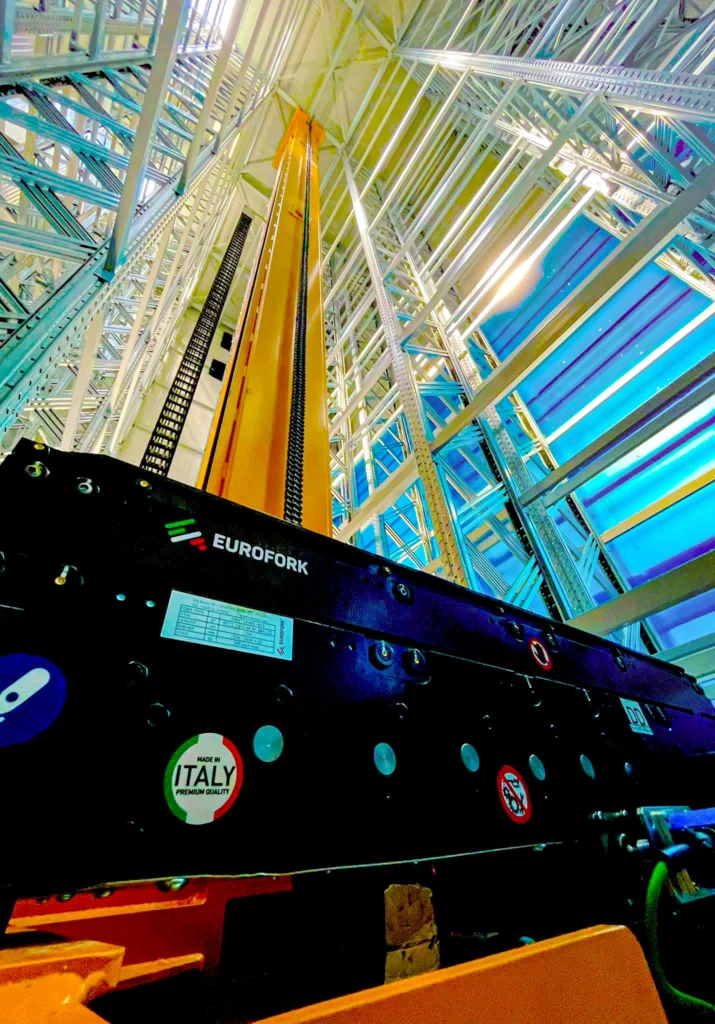
Naturally, each scenario must be assessed individually: factors such as SKU turnover and the required performance level must be taken into account. In summary, however, optimizing space is often the intervention with the highest ROI, as it makes it possible to avoid far more costly investments such as warehouse expansion. By adopting targeted intralogistics solutions, many companies are able to store more goods within the same volume and support growth without being constrained by the limitations of the storage solutions used to date.
Lack of real-time traceability and data integration
In the warehouse management, real-time traceability of goods and visibility into warehouse data are essential elements. When a company lacks accurate information about the exact location of each pallet, remaining inventory levels, and product traceability, it may face multiple challenges:
- Inventory errors: phantom or ghost inventory, with systems indicating inaccurate availability
- Delays in order processing
- Failure to reorder in a timely manner
- Potential non-compliance in regulated industries (such as, for example, the food or pharmaceutical sectors)
At the root of these issues is often the use of outdated or non-integrated management methods. The key lies in implementing fully integrated digital warehouse management, relying on experienced System Integrators and trusted partners.
Eurofork pallet shuttle systems are managed by EXA Platform, the WCS (Warehouse Control System) that acts as the link between automated material-handling devices and the WMS (Warehouse Management System).
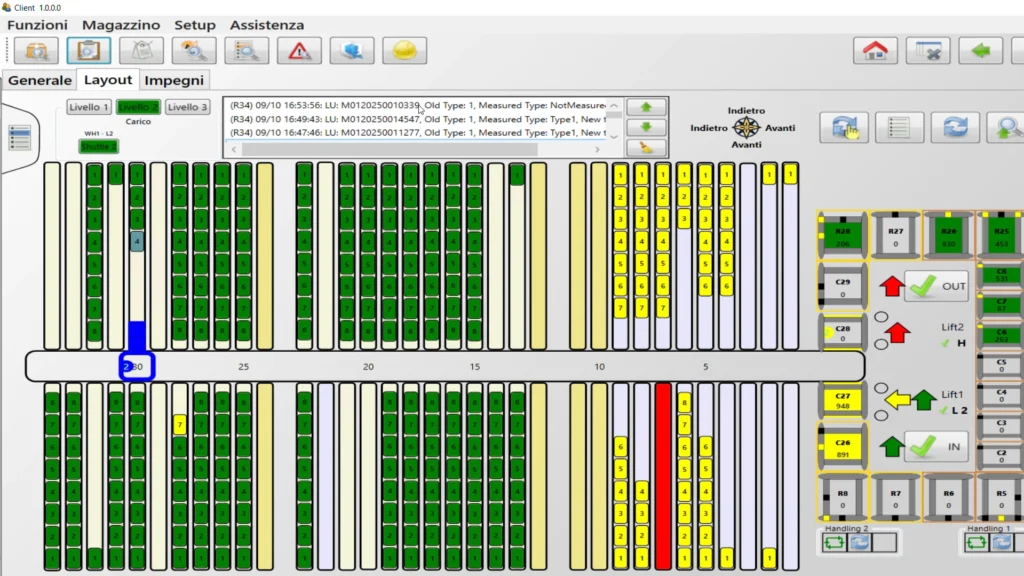
EXA orchestrates the movements of the pallet shuttles and collects advanced data on machine performance. By analyzing this data (Big Data), the pallet shuttles are able to enable predictive maintenance and dynamically optimize material flows.
Another critically important aspect of traceability is documentation: maintaining a historical record of the exact location and dwell time of each product is vital in the event of audits or quality issues. Here too, software plays a key role by associating traceability information with each SKU (stock keeping unit).
The result is a much more transparent, faster, and more reliable operation. Companies that have successfully implemented traceability and system integration report significant improvements: reduced safety stock levels (because data can be trusted and there is no need to overstock), a drastic reduction in inventory errors and a greater ability to respond to customers in real time with accurate information on availability and delivery times.
How to avoid internal logistics issues: general best practices
After reviewing the most common inefficiencies, let’s look at how to avoid these internal logistics issues by adopting some well-established industry best practices.
Automation is a powerful enabler of efficiency, but it must be implemented in a targeted way.
It is essential to assess where automation delivers the greatest benefits based on specific volumes and operational bottlenecks.
When it comes to material-handling solutions, which represent the operational core of an automated warehouse, a well-considered choice can deliver concrete and significant benefits:
- Pallet handling: smoother and safer operations, with precise and fast handling regardless of weight or position.
Automated systems such as telescopic forks or pallet shuttles, by eliminating human error and preventing damage caused by improper handling, help reduce downtime due to accidents and ensure uninterrupted logistics flows
- Picking speed and throughput: to overcome the productivity limits of manual systems, intensive flow automation solutions are essential. In pallet warehouses, multi-depth and multi-SKU pallet shuttle systems such as ESMARTSHUTTLE® or E4SHUTTLE significantly increase storage and retrieval speeds by removing bottlenecks. This directly addresses the issue of long retrieval times, as the warehouse can process multiple orders simultaneously
- Storage density: to maximize the use of volumes and address low-density issues, the solution is to adopt compact storage systems. From an automation perspective, Eurofork’s E4CUBE®, mentioned earlier, represents one of the most innovative concepts: a modular, ultra–high-density standard automated warehouse that, thanks to extremely compact automated shuttles capable of moving on all four directions, eliminates many aisles and makes optimal use of storage volume. The result? Up to 40% space savings compared to a traditional system, while maintaining the same storage capacity
- Traceability and software integration: the final step toward a fully efficient warehouse is the automation of information flows. This is where advanced management and control software solutions come into play. Solutions such as EXA Platform, Eurofork’s WCS, enable centralized control of all material-handling devices within the automated warehouse and seamless interfacing with the company’s WMS.
This ensures a real-time flow of information: every movement of each pallet shuttle and pallet within the AS/RS system is tracked and updated instantly in the databases. Thanks to Eurofork’s internationally patented absolute positioning technology, a continuously accurate digital map of the warehouse is maintained. Whereas warehouse managers once had to rely on the experience of operators to know where a pallet was located, they can now check it with a single click. In addition, software integration makes it possible to implement advanced features such as operational data analytics and predictive control
Each solution demonstrates how internal logistics issues can be addressed and resolved proactively. Naturally, not all solutions are suitable for every context: implementation requires a careful analysis of specific needs and a well-orchestrated project developed in collaboration with a qualified System Integrator.
Nevertheless, the direction is clear: technology and organization together make it possible to transform a warehouse from a potential source of inefficiency into a true operational strength.
In today’s competitive landscape, an efficient and automated warehouse can become a true strategic advantage. Companies that eliminate internal bottlenecks, deliver orders without delays or errors, and fully leverage their resources are better positioned to satisfy customers and reduce costs.
In this transformation, technology partners such as Eurofork play a key role by providing expertise and products that enable System Integrators to automate and optimize warehouses with solutions that effectively meet today’s requirements and are ready for tomorrow’s challenges.

Contact Us
To request further information, fill out the form. Our sales department is available to help you with your next intralogistics automation project.