



Warehouse automation
14 July 2026
WAREHOUSE STORAGE LOGIC: FIFO, LIFO AND FEFO
FIFO, LIFO and FEFO. DIFFERENCES AND GUIDELINES FOR CHOOSING THE RIGHT METHOD
In the logistics world, efficient inventory management is a key factor in ensuring operational continuity, reducing waste, and maintaining customer satisfaction. Among the most widely used strategies are three fundamental approaches: FIFO, LIFO, and FEFO.
Understanding the differences between FIFO, LIFO, and FEFO in warehouse management makes it possible to choose the most suitable method based on the type of product, the industry, and the level of automation available. In fact, not all solutions are the same, and an inappropriate choice can have a direct impact on both costs and quality.
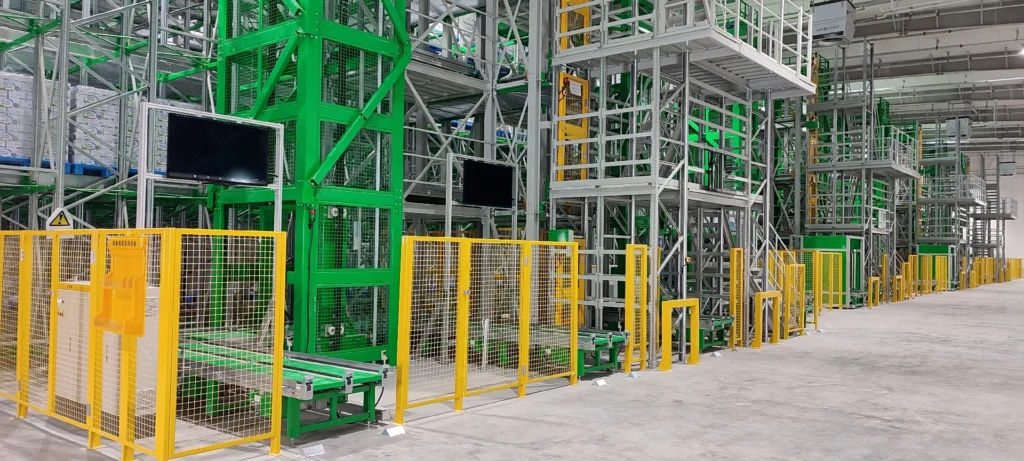
DIFFERENCE BETWEEN FIFO, LIFO AND FEFO IN WAREHOUSE MANAGEMENT
The three approaches differ in the way they determine the priority for goods leaving the warehouse.
The FIFO (First In, First Out) method follows a simple principle: the products that enter the warehouse first are also the first to leave. This approach mirrors the natural consumption cycle and is widely used in warehouses where continuous inventory rotation is essential.
LIFO (Last In, First Out) operates in the opposite way: the last product to enter the warehouse is the first one to be picked. This logic can be useful in specific situations, but it is generally not suitable when handling perishable products.
FEFO (First Expired, First Out) introduces an even more advanced criterion based on the expiration date. In this case, what matters is not when the product was stored, but when it must be used or sold. This distinction makes FEFO particularly important in industries where shelf life is a critical factor.
FEFO WAREHOUSE METHOD: WHY IT IS BECOMING INCREASINGLY POPULAR
Among these three warehouse management methodologies, the FEFO method is now considered one of the most advanced standards for inventory management, particularly in complex operating environments.
Unlike FIFO, which is based solely on the order of product receipt, FEFO enables companies to dynamically manage picking priorities. This means that products received more recently may still be given priority if they are closer to their expiration date.
This approach provides much more accurate control over inventory levels and significantly reduces the risk of waste. For this reason, FEFO is now widely adopted in the food, pharmaceutical, and cosmetics industries, where traceability and product safety are critical requirements.
FOOD WAREHOUSE: FIFO VS LIFO
When it comes to food warehousing, the choice between FIFO and LIFO becomes particularly important.
FIFO (First In, First Out) is considered the foundation of effective inventory management, as it ensures stock rotation that is aligned with the nature of food products. By using the oldest inventory first, companies can prevent product deterioration, minimize waste, and maintain high quality standards
Copilot said:
LIFO, by contrast, is not suitable for this context. Using it in a food warehouse can lead to an accumulation of slow-moving products, increasing the risk of expiration and waste. From an operational perspective, it reduces inventory control and increases inefficiencies.
For this reason, when comparing FIFO and LIFO in food warehousing, FIFO is almost always the preferred choice, and in more advanced operations it is often complemented by, or replaced with, FEFO (First Expired, First Out).
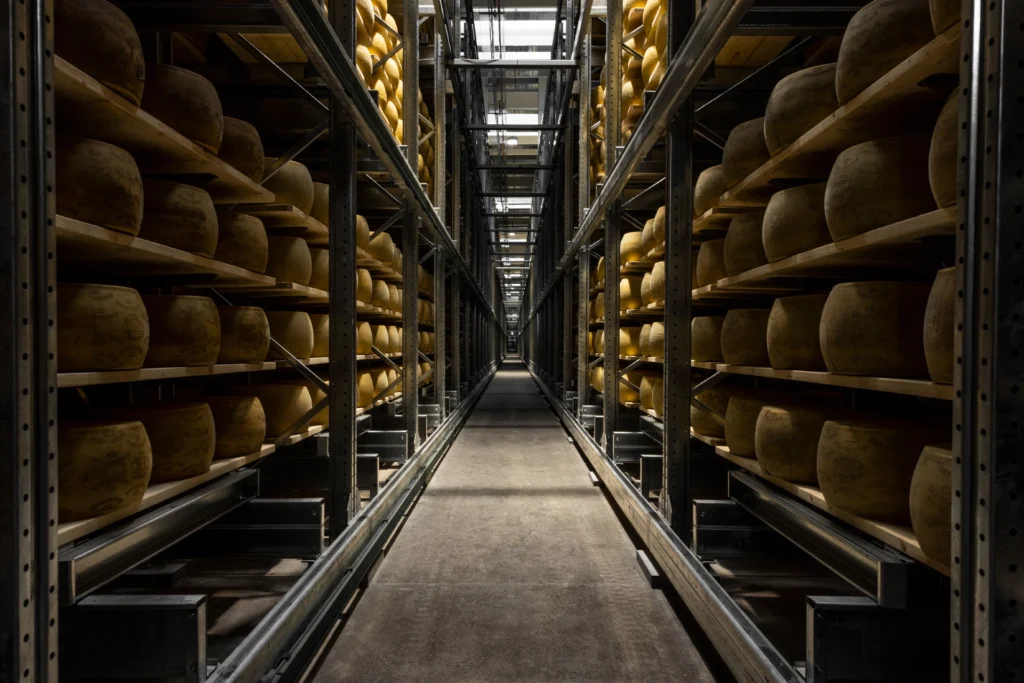
FIFO, LIFO AND FEFO IN AUTOMATED WAREHOUSES
LThe introduction of automated warehouses has radically changed the way these inventory management methods are applied.
Today, the challenge is no longer simply choosing between FIFO, LIFO and FEFO, but integrating these approaches into intelligent systems capable of autonomously managing material flows. Advanced software solutions and automated material handling systems make it possible to implement these strategies with exceptional accuracy, reducing errors and improving overall performance.
In particular, FEFO finds its ideal application in automated warehouses, as it requires a level of control and traceability that is difficult to achieve through manual processes alone. Likewise, FIFO and LIFO can also be configured according to the facility layout and specific operational objectives.
At the heart of this control is the WMS (Warehouse Management System), the software platform responsible for managing warehouse operations. A WMS enables companies to track every load unit, manage batches, expiration dates, and storage locations, and, most importantly, automatically apply FIFO, LIFO, or FEFO rules during picking operations. Thanks to these systems, picking priorities are no longer left to operators’ discretion but are driven by precise, configurable rules.
Supporting the WMS are several technologies used to track inventory throughout the warehouse, including:
- Barcodes and QR codes, which enable the immediate identification of products and batches.
- RFID technology, which provides even faster and more automated traceability.
- Radio-frequency (RF) terminals and wearable devices, which assist operators in their daily activities.
- Guided picking systems (such as voice picking and pick-to-light), which help reduce errors and improve operational efficiency.
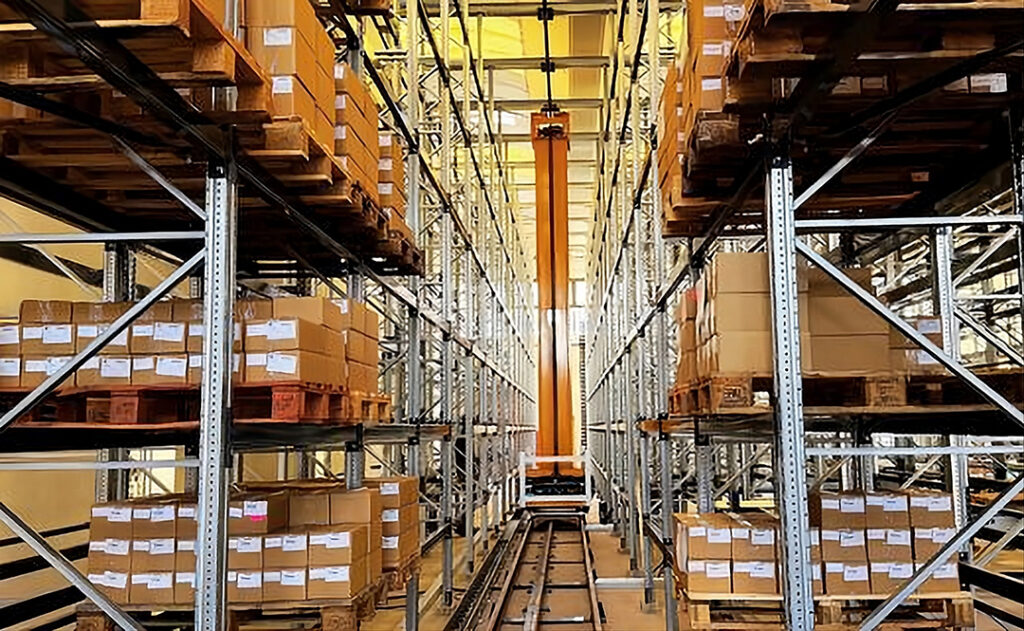
In the most advanced warehouses, these technologies are integrated with Automated Storage and Retrieval Systems (AS/RS), where software and hardware work together to ensure the chosen inventory management logic is applied consistently and accurately.
OTHER WAREHOUSE STORAGE METHODS
In addition to FIFO, LIFO, and FEFO, there are other, less commonly used approaches that can be adopted depending on specific business needs:
- HIFO (Highest In, First Out): used primarily to prioritize the withdrawal of inventory items with the highest acquisition cost.
- LOFO (Lowest In, First Out): a less common method, applied in specific operational or accounting contexts.
- Lot or serial number management: essential for ensuring product traceability throughout the supply chain.
- ABC inventory management: classifies products based on their value or turnover rate to optimize inventory control and prioritization.
These methods do not necessarily replace FIFO, LIFO and FEFO; rather, they can be used alongside them to create a more comprehensive and effective inventory management system.
WHICH METHOD SHOULD YOU CHOOSE FOR YOUR WAREHOUSE?
The choice between FIFO, LIFO, and FEFO primarily depends on the type of goods being handled and the industry in which the company operates.
When dealing with perishable products or items with an expiration date, FIFO provides a solid starting point, while FEFO enables a higher level of efficiency and inventory control by prioritizing products with the earliest expiration dates. LIFO, on the other hand, is generally used in industrial environments where inventory turnover is not affected by time-sensitive factors.
Increasingly, however, the real differentiator is not so much the method chosen, but the ability to implement it effectively through an advanced management system, such as an automated warehouse.
CONCLUSION
Understanding the differences between FIFO, LIFO, and FEFO in warehouse management is essential for optimizing logistics processes and improving inventory control.
In an increasingly competitive market, adopting the most suitable method and supporting it with automated technologies helps reduce waste, increase efficiency, and ensure a more reliable service.
FIFO, LIFO, and FEFO are not just theoretical models; they are practical tools for building a smarter, more efficient warehouse.
Ultimately, the real evolution in warehouse management lies not only in selecting the right method, but also in the ability to integrate it into a digital ecosystem. This integration makes it possible to achieve:
- Real-time inventory visibility
- Reduced picking errors
- Space optimization
- Greater operational flexibility
FIFO, LIFO, and FEFO therefore become part of a broader strategy in which data, automation, and processes work together to deliver accurate, efficient, and scalable inventory management.

Contact Us
To request further information, fill out the form. Our sales department is available to help you with your next intralogistics automation project.