



Warehouse automation
23 July 2026
PREDICTIVE MAINTENANCE: HOW TO REDUCE THE MACHINE DOWNTIME IN AUTOMATED WAREHOUSES
PANORAMICA SUI BENEFIT DELLA OVERVIEW OF THE BENEFITS OF PREDICTIVE MAINTENANCE AND THE TECHNOLOGIES THAT MAKE IT POSSIBLE
In an automated warehouse, even a short period of unplanned downtime can lead to significant costs and delays in deliveries.
In the “True cost of downtime 2024” report, Siemens estimated that the world’s 500 largest industrial companies lose approximately $1,4 trillion per year due to unplanned dowtime, equivalent to around 11% of their annual revenue.
In the automotive industry, just one hour of production line downtime can cost as much as $2.3 million. This trend increases year after year.
Impressive figures that highlight how crucial it is to reduce machine downtime in order to maintain competitiveness and operational efficiency.
In the intralogistics sector, pallet handling devices (including stacker cranes equipped with telescopic forks, shuttle systems, and AGVs) play a vital role in automated operations. A failure in any of these systems can bring entire sections of the logistics flow to a standstill, creating bottlenecks and resulting in significant operational downtime and associated costs.
Ensuring operational continuity and maximizing the reliability of these systems requires an advanced maintenance approach driven by data and automation technologies.
In this scenario, predictive maintenance plays a key role by allowing potential failures to be identified before they occur, reducing downtime, extending asset lifespan, and optimizing both operational costs and overall performance.
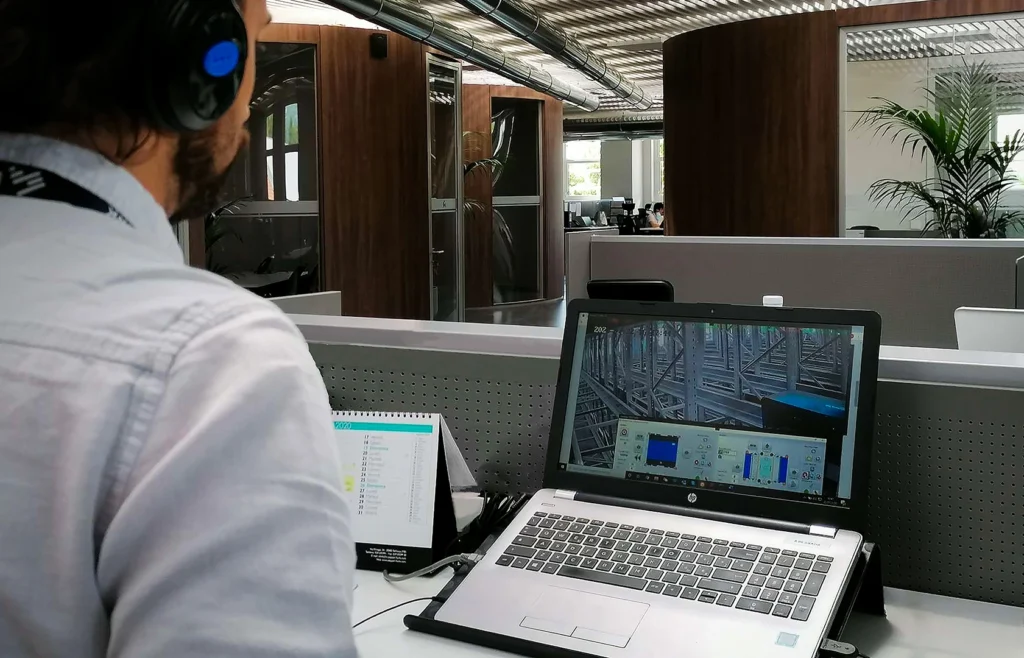
MINIMIZING MACHINE DOWNTIME: THE ROLE OF INTELLIGENT MAINTENANCE
The primary goal of any automated warehouse manager is to minimize unplanned downtime.
Traditional maintenance approaches, such as corrective maintenance (intervening after a failure occurs) or scheduled preventive maintenance (performed at predetermined intervals), do not always guarantee optimal results.
Preventive maintenance involves scheduled interventions performed at predefined intervals (for example, after a certain number of operating hours). While this approach helps prevent some failures, it often results in planned downtime and, in some cases, the unnecessary replacement of components that are still functioning properly.
Furthermore, failures that occur before the scheduled maintenance interval may still go undetected.
Predictive maintenance introduces an approach based on real-time data and advanced
analytics. Its goal is to predict when a failure or performance degradation is likely to occur, enabling maintenance teams to take action before equipment comes to a halt.
As we will see, this type of “smart” maintenance leverages IoT sensors, predictive analytics algorithms, and software platforms, commonly referred to as warehouse monitoring systems (centralized warehouse monitoring platforms), to continuously monitor the health and operating conditions of equipment.
Around the world, the adoption of these solutions is growing rapidly, and predictive maintenance is now widely regarded as a key strategy for reducing company downtime.
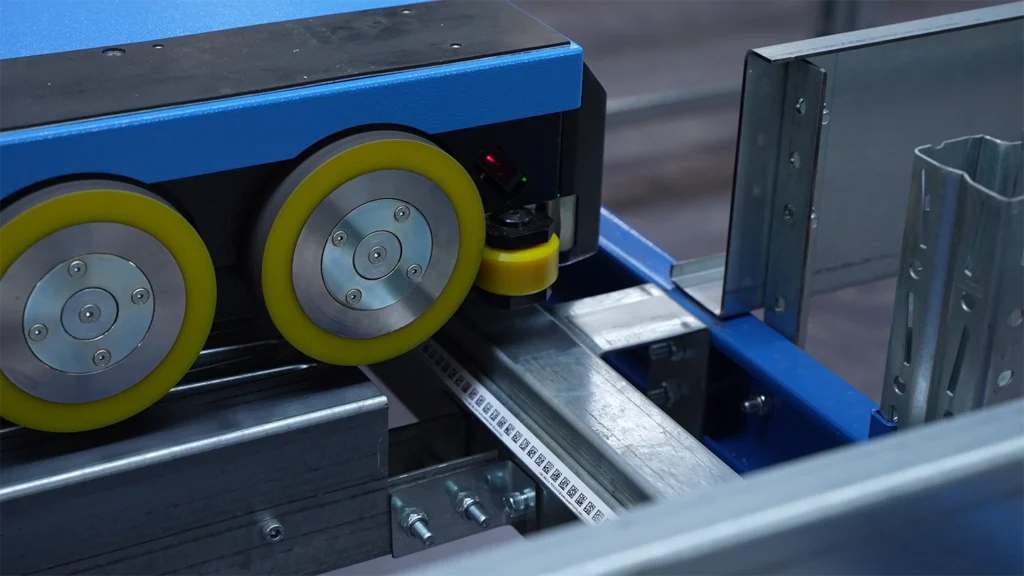
WHAT IS THE PREDICTIVE MAINTENANCE (AND HOW IT DIFFERS FROM PREVENTIVE MAINTENANCE)
In short, predictive maintenance is a maintenance approach that leverages data collection and algorithms to anticipate potential issues.
While traditional preventive maintenance is based on inspections and component replacements performed at fixed intervals in order to statistically reduce the likelihood of failures, predictive maintenance continuously monitors equipment operating parameters through condition monitoring and identifies abnormal trends that may indicate a future failure.
In practice, sensors installed on machinery monitor parameters such as vibration, temperature, current consumption, mechanical play, and more, transmitting this data to an analysis system.
When the analytics platform detects a value outside predefined thresholds or an abnormal pattern (for example, a gradually increasing vibration imbalance in a motor), it identifies that component as being at risk of failure in the near future.
This makes it possible to schedule targeted maintenance interventions only where and when they are actually needed, avoiding both unexpected breakdowns and premature maintenance activities.
In other words, predictive maintenance and preventive maintenance share the same objective: preventing failures. However, predictive maintenance is a dynamic, condition-based approach, where maintenance intervals are determined by data rather than fixed schedules.
One of the key benefits of predictive maintenance is the maximization of equipment uptime, striking the optimal balance between the risk of failure and maintenance costs.
Moreover, by reducing unplanned downtime, predictive maintenance also improves operator safety and service quality. Fewer failures mean fewer unexpected interruptions and fewer delays in warehouse operations.
Another important advantage is the reduction of material waste and spare parts consumption, as maintenance is carried out only when needed, rather than replacing components according to a fixed schedule even though they may still have useful service life remaining.
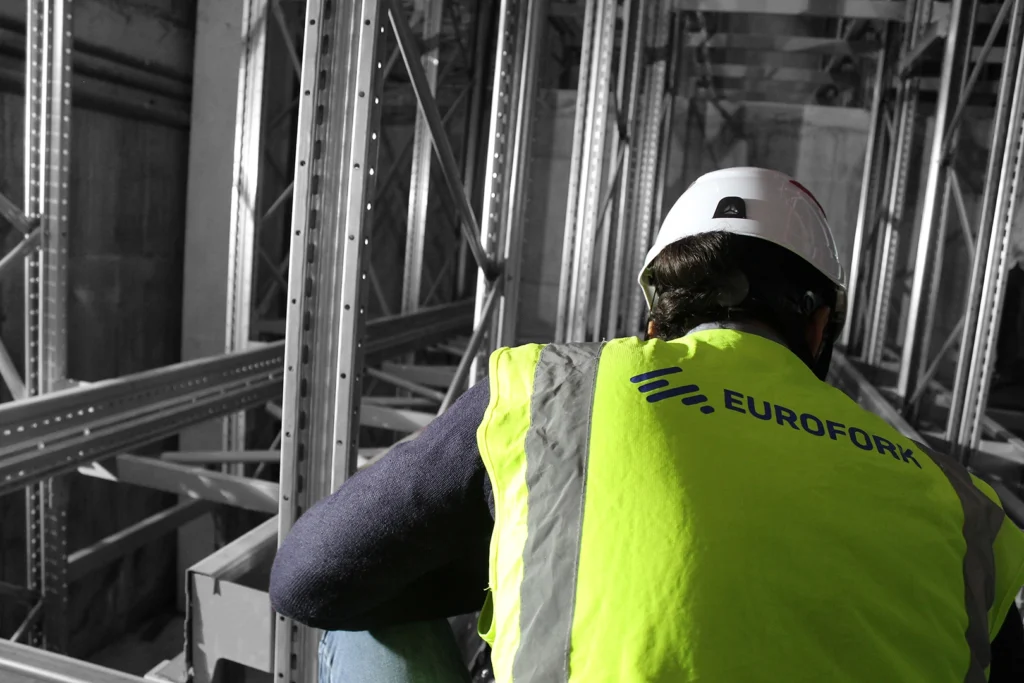
BENEFITS OF PREDICTIVE MAINTENANCE IN WAREHOUSE AUTOMATION
Implementing predictive maintenance programs in automated warehouses brings a wide range of measurable advantages.
Here are the main benefits of predictive maintenance in intralogistics automation:
- Reduction of unplanned downtime: Predictive maintenance can reduce unexpected equipment downtime by 30-50% compared to operations that do not employ predictive strategies. This translates into fewer disruptions, more orders fulfilled on time, and higher productivity
- Optimization of maintenance costs: by intervening only when necessary, predictive maintenance avoids both unnecessary maintenance activities and emergency repairs, leading to an approximately 20-30% reduction in maintenance costs
- Increased equipment lifespan and reliability: By addressing early signs of wear in a timely manner, machines can operate longer and under optimal conditions. In general, a well-implemented predictive maintenance strategy can extend the lifespan of key assets by more than 20% compared to reactive maintenance approaches
- Improved safety and quality: By reducing unexpected failures, predictive maintenance also minimizes emergency situations that may pose safety risks to operators (for example, a stacker crane becoming stuck at height). In addition, well-maintained equipment operates with greater accuracy and fewer errors, improving the quality of operations (for example, reducing impacts, misplacements, or dropped loads)
- Higher throughput and more consistent performance: A warehouse where equipment is continuously maintained in optimal operating condition can sustain high levels of productivity and material handling performance over time, without the performance degradation typically associated with worn or deteriorating machinery
It is therefore clear that predictive maintenance is not just about maintenance; it is a strategic lever for improving operational efficiency.
A widely cited example highlighted by the World Economic Forum is that the widespread adoption of sensors and predictive algorithms can save millions of hours of downtime while significantly increasing productivity, making predictive maintenance a key pillar of the industry 4.0 paradigm.
It is no coincidence that reducing downtime in manufacturing has become an increasingly important priority for industrial companies. Recent data shows that the adoption of advanced monitoring and maintenance systems is steadily growing: a significant number of organizations now rely on condition monitoring technologies to prevent failures and improve equipment reliability.
In this context, predictive maintenance is emerging as one of the most effective tools for ensuring operational continuity and minimizing the impact of machine downtime.
INDUSTRY 4.0 TECHNOLOGIES: IoT, WAREHOUSE MONITORING AND DOWNTIME REDUCTION STRATEGIES
So, how is predictive maintenance implemented in an automated warehouse?
At the core of this approach are Industry 4.0 technologies: IoT sensors, continuous connectivity, and advanced analytics software.
Next-generation material handling devices integrate intelligent sensors that monitor key operating parameters in real time and transmit this data to a warehouse/device monitoring system.
The collected data is then analysed using artificial intelligence algorithms and machine learning models, which can detect anomalies that would be invisible to the human eye.
For example, on a stacker crane, it is possible to identify micro-vibrations that are imperceptible to operators but may indicate a misalignment issue. Similarly, on a conveyor system, thermal sensors can detect abnormal motor overheating, providing an early warning of a potential mechanical failure.
Strategies to reduce company downtime like these are built on the combination of intelligent physical components and advanced monitoring software platforms.
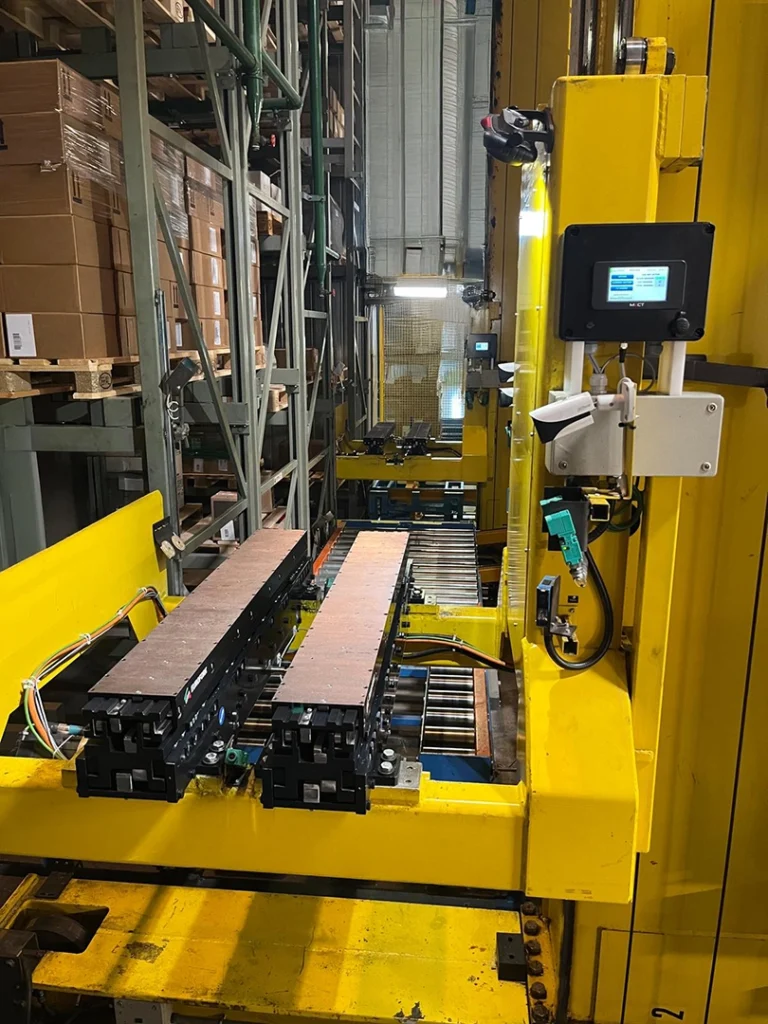
Smart handling devices equipped with dedicated predictive maintenance hardware and software are becoming increasingly common in intralogistics. E-SMARTFORKS, for example, represent the evolution of traditional telescopic forks.
These smart telescopic forks are equipped with integrated sensors and IoT devices capable of 24/7 monitoring, not only the condition of the device itself but also collecting data to predict potential issues arising from unexpected events that may not be directly related to the fork.
For example, an E-SMARTFORKS unit can detect abnormal vibrations during pallet handling or temperatures exceeding predefined thresholds and immediately trigger an automatic notification, allowing maintenance personnel to intervene before the fork is damaged and causes a system shutdown.
In addition, all the big data collected can be stored, analyzed, and processed in the cloud without requiring any integration with the company’s MES or ERP systems.
This practical example demonstrates how technological innovation is providing concrete tools to implement predictive maintenance even at the level of individual components within warehouse automation systems.
CONCLUSIONS: PREDICTIVE MAINTENANCE FOR GREATER UPTIME AND OPERATIONAL EFFICIENCY
The evidence gathered over recent years is clear: thanks to intelligent sensors, big data, and artificial intelligence algorithms, companies have been able to cut unplanned downtime in half and save hundreds of millions of euros that would otherwise have been lost to operational disruptions.
Predictive maintenance enables organizations to intervene only when necessary, striking the right balance between equipment reliability and maintenance costs, while ensuring that critical warehouse devices, from telescopic forks and shuttle systems to AS/RS installations and AGVs, remain in optimal operating condition at all times.
The adoption of these practices, together with Industry 4.0 technologies such as IoT, AI, and warehouse monitoring platforms, provides a concrete answer to the challenge of reducing downtime in manufacturing and logistics. A warehouse that leverages predictive maintenance can ensure on-time deliveries, process stability, and lower operating costs, strengthening its competitive advantage over the medium and long term.
In this context, innovative solutions developed by partners such as Eurofork, E-SMARTFORKS telescopic forks for real-time monitoring within automated warehouses, demonstrate how predictive maintenance is becoming a tangible reality in next-generation AS/RS systems.
Thanks to these advances, modern intralogistics facilities can aim for near-zero downtime operations, minimizing avoidable shutdowns while consistently maintaining high levels of operational performance.

Contact Us
To request further information, fill out the form. Our sales department is available to help you with your next intralogistics automation project.