



Warehouse automation
30 September 2026
Automated Pallet Handling: Why OEM Produced Technologies Make the Difference in Systems Designed by System Integrators
Automated pallet handling is at the core of intralogistics systems: this is why integrating the right technologies produced by OEMs makes all the difference.
Logistics is undergoing a profound transformation. The increase in volumes, growing customer expectations, and the difficulty in finding skilled labor are driving more and more companies toward automated handling solutions in order to reduce internal management times. In this context, pallet handling represents one of the processes with the greatest impact on the operational performance of warehouses and production facilities.
As reported in the 2025 MHI Annual Industry Report, automation and supply chain digitalization continue to be a strategic priority for companies, which are increasing investments in advanced technologies to enhance resilience, productivity, operational visibility, and responsiveness to market changes.
Today, the success of an automated system does not depend exclusively on the presence of advanced technologies, but on the ability to integrate different solutions produced by OEMs into a single coordinated ecosystem. This is where the role of System Integrators comes into play, as they are tasked with designing and orchestrating systems in which storage, transport, handling, and software work in perfect synergy.

Pallet handling has become a strategic factor
In industrial environments, the flow of load units directly affects productivity, safety, line utilization, and service levels.
When pallet handling is not designed consistently with the layout, processes, and production rates, accumulations, delays, congestion, and bottlenecks can easily arise, compromising the efficiency of the entire system.
For this reason, an increasing number of companies are adopting automated handling systems capable of enhancing operational continuity and improving the management of internal logistics flows while reducing potential errors. The objective is not only to automate individual pallet handling activities, but to build an intelligent material handling management system.
This evolution is consistent with what is highlighted in the 2025 MHI Annual Industry Report, according to which supply chain performance increasingly depends on the ability to orchestrate material handling, storage, software, and automation technologies in an integrated manner within a single digital operational ecosystem.
From traditional pallet handling to automated material handling
For many years, pallet management has been primarily handled by forklifts. Although this solution continues to be used in numerous contexts, in some cases it may present limitations, especially when handling volumes increase or high productivity levels are required.
Pallet systems, on the other hand, make it possible to:
- improve operator safety
- increase inventory accuracy
- enhance throughput
- optimize the use of available space
According to the scientific literature on warehouse operations, coordination among storage, handling, and control systems is one of the main factors influencing the overall performance of the internal supply chain.
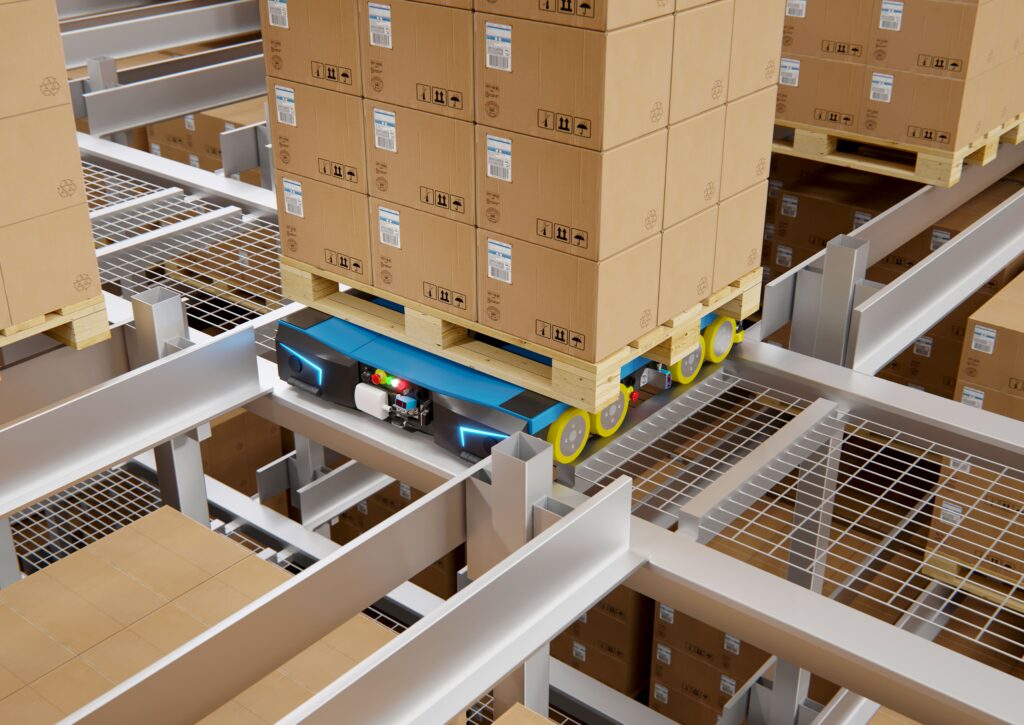
The role of pallet shuttles in high density storage systems
Among the technologies that have contributed most significantly to the evolution of automated logistics, the pallet shuttle now holds a leading position.
Integrated within compact racking systems, this solution enables pallets to be moved autonomously within storage lanes, minimizing human intervention and making the best use of every available cubic meter.
In pallet storage systems, the shuttle operates synergy with lifts, conveyors, TCS, and control software, creating a high-performance ecosystem capable of handling large material handling volumes.
By reducing the number of aisles and fully utilizing the depth and height of the structure, companies can increase storage capacity, improve throughput, reduce pallet access times, and enhance inventory accuracy while simultaneously limiting forklift traffic.
In addition, this solution makes it possible to contain real estate investments, manage a greater number of SKUs, and increase productivity without expanding the warehouse footprint.
For these reasons, the pallet shuttle system is one of the most in-demand technologies in high-density automation projects, particularly in the food & beverage, cold storage, pharmaceutical & personal care, automotive, dairy, paper & tissue, manufacturing, and distribution sectors.
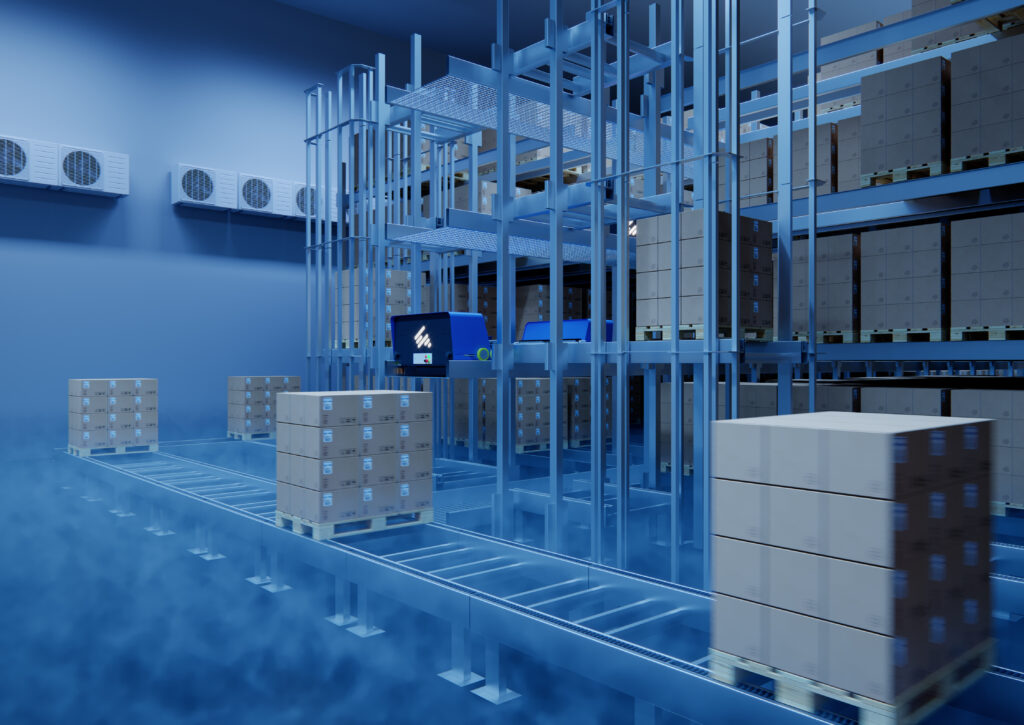
Conveyors and pallet handling systems: the network that connects the entire facility
If the shuttle represents the engine of the automated warehouse, transport systems form its connecting network, ensuring a continuous and efficient flow of materials.
Modern pallet handling systems include:
- roller conveyors
- chain conveyors
- transfer cars
- turntables
- pallet lifts
- AMRs
These technologies manage pallet movement between different operational areas, continuously and reliably connecting production, storage, picking, and shipping.
The automation of pallet transport makes it possible to improve space utilization, reduce operating costs, and increase the reliability of logistics flows.
This is where the concept of a pallet handling solution emerges: not a single machine, but a coordinated set of technologies designed to work as one integrated system.
Automated pallet movers: flexibility becomes a competitive advantage
Alongside fixed solutions, automated pallet movers, such as AGVs and AMRs, are playing an increasingly important role.
These autonomous vehicles make it possible to transport pallets between different areas of a facility without rigidly defined routes, offering a level of flexibility that is particularly valued in rapidly evolving production environments.
In some applications, AGVs can also be equipped with telescopic forks, enabling the automatic pickup and deposit of pallets directly from racking systems, transfer stations, or storage systems, further expanding flexibility and integration possibilities within the facility.
Their adoption is being driven by the need to rapidly adapt layouts and logistics processes to changes in demand, without having to modify existing infrastructures.
For this reason, many System Integrators are adopting hybrid architectures that combine conveyors, pallet shuttles, and automated pallet movers, achieving the best balance between productivity and operational flexibility.
There is no single technology for pallet handling
One of the most interesting aspects of intralogistics is the availability of different technologies, each designed to address specific requirements.
Conveyors ensure continuity and reliability in repetitive flows. AMRs provide agility and flexibility. Automated monorail systems enable very high throughput levels, reaching hundreds of pallets per hour in high-intensity applications.
For this reason, the role of the System Integrator is not simply to select a technology, but to combine the most suitable solutions to build a pallet solution that is truly aligned with the customer’s operational objectives.
The real value? The integration of technologies produced by OEMs
In an automated system, performance does not depend exclusively on the quality of individual machines, but on the ability to make different technologies communicate within a coordinated ecosystem.
Organizations that achieve the best results are those that design automation as a coordinated set of hardware, software, and processes, rather than as a collection of independent solutions.
For this reason, System Integrators play a key role in designing systems that integrate:
- automated pallet shuttles
- shuttle pallet racking
- automated conveyors
- automated pallet movers
- AS/RS systems
- WMS, WCS, and WES software
Digital optimization, distributed control architectures, and process simulation are also playing an increasingly important role in the design of automated material handling systems, helping to reduce risks, improve performance, and accelerate system commissioning.
The benefits resulting from this integration include:
- increased productivity
- reduced operating costs
- higher storage density
- improved safety
- high system availability
- greater future scalability
- complete traceability of logistics flows
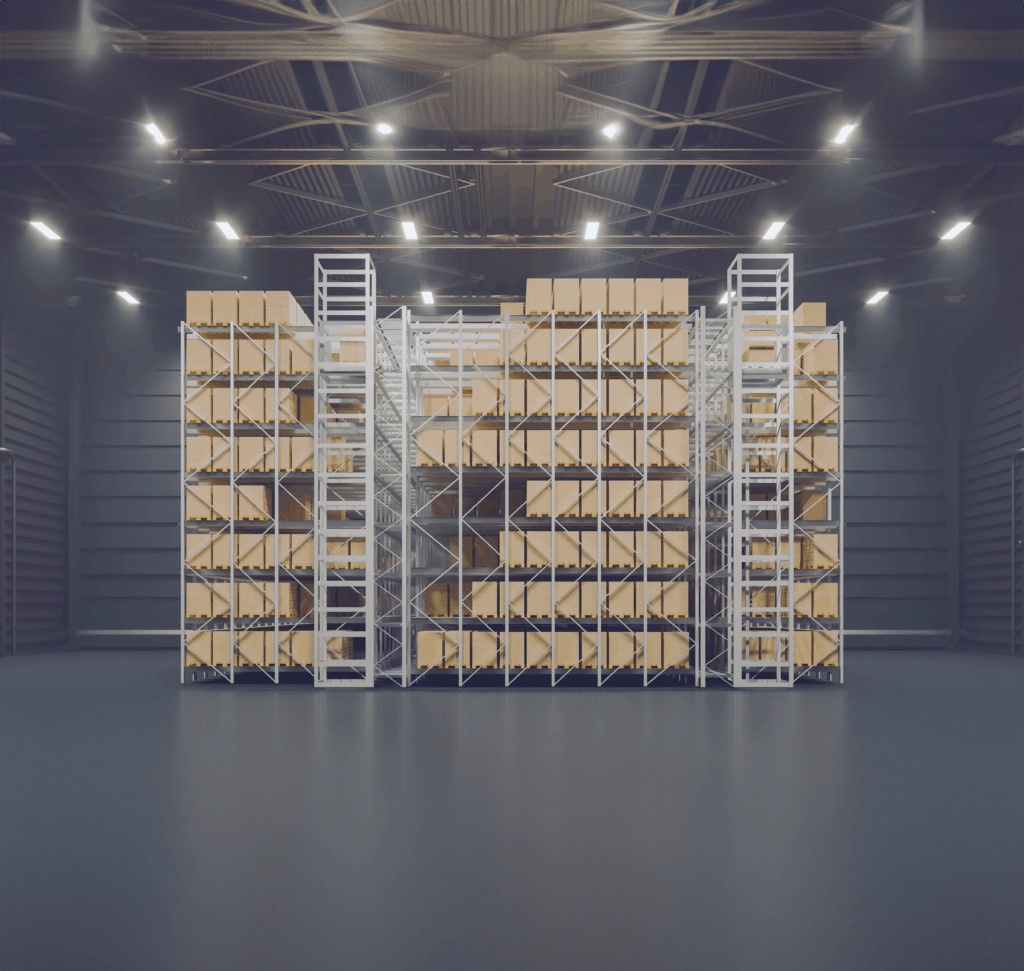
Integration is the real value multiplier
The automation of pallet handling generates the greatest benefits when it is designed as part of a continuous and coordinated flow.
The most recent analyses of industrial material handling systems show that proper integration between transportation, storage, buffer management, traceability, and software control makes it possible to reduce interference, minimize bottlenecks, and increase process repeatability.
This is precisely where the System Integrator comes into play, whose role is to transform specialized OEM technologies into a single pallet handling solution capable of supporting the company’s production objectives.
The integration of pallet storage systems, automated pallet shuttles, conveyors, automated pallet movers, and orchestration software makes it possible to achieve higher levels of:
- productivity
- storage density
- safety
- traceability
- operational availability
- future scalability
Eurofork: an enabling technology for automation
In an automated system, every component contributes to the overall performance of the operation.
OEM-produced technologies dedicated to load unit picking, handling, and depositing play a central role in the reliability of the entire process. For this reason, System Integrators look for solutions capable of ensuring precision, execution speed, and operational continuity.
In this context, Eurofork represents a technology partner for the development of pallet storage systems, automated warehouses, and high-performance pallet handling systems. Integrated into the architectures designed by System Integrators, Eurofork solutions help make storage and handling operations more efficient, supporting the productivity, scalability, and reliability objectives required by the logistics of the future.
Conclusion
The evolution of intralogistics is shifting the focus from individual machines to the entire automated ecosystem.
Technologies such as automated pallet shuttles, automated pallet movers, conveyors, and racking systems now represent the key elements of an automation strategy. However, the real competitive advantage comes from their integration into a coordinated solution designed by the System Integrator.
The latest research on logistics digitalization confirms that competitive advantage no longer derives from the adoption of individual technologies, but from the ability to orchestrate data, automation, and physical material handling within an integrated and scalable system.
It is precisely through the interaction between specialized OEM produced technologies, intelligent software, and system-level design that the most significant benefits are achieved in terms of productivity, safety, storage density, and operational continuity. In this context, pallet handling is no longer simply a logistics activity, but a determining factor in the overall performance of the entire automated facility.

Contact Us
To request further information, fill out the form. Our sales department is available to help you with your next intralogistics automation project.