



Warehouse automation
11 September 2026
The Evolution of High-Density Storage: Toward Increasingly Compact and Automated Warehouses
From pallet shuttles to modular architectures: the technologies that make warehouses smarter, more efficient, and higher-performing.
In recent years, the logistics industry has faced an increasingly complex challenge: increasing storage capacity without expanding the occupied footprint. Rising real estate costs, growing demand for flexibility, and the need to manage ever more dynamic flows are prompting companies to rethink how they use available space.
In this context, high-density storage systems represent one of the most effective solutions. The goal is not only to store more pallets within the same volume, but also to optimize processes, improve safety, and increase productivity.
From traditional racking to automated systems
For many years, traditional racking systems have been the most widely used solution for pallet storage. However, the presence of numerous operating aisles inevitably limits storage density.
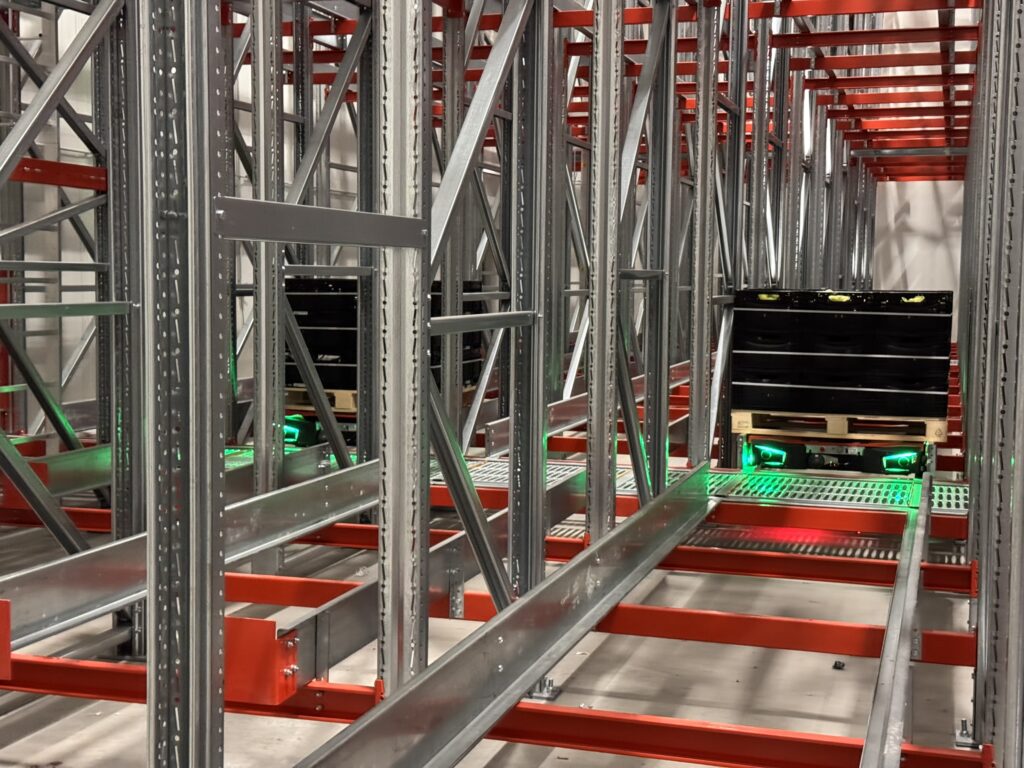
The introduction of technologies such as pallet shuttles has made it possible to significantly increase available storage capacity by reducing the space required for material handling and improving operational efficiency.
In addition, current market demands increasingly require systems capable not only of maximizing the use of storage volume, but also of providing higher levels of modularity and scalability, enabling warehouses to evolve easily in line with future business needs.
New Modular Architectures for Modern Logistics
One of the most significant developments in the field of high-density storage is represented by standardized and modular architectures.
This evolution is the result of a technological journey that began with mother-daughter pallet shuttle systems, which introduced the concept of automated handling within high-density storage channels. Subsequently, the advent of 4-Way Shuttle systems, capable of moving autonomously in multiple directions and operating across different levels, further expanded the possibilities for space utilization and logistics flow management. These technologies are not mutually exclusive but rather address different application requirements: the evolution toward increasingly advanced solutions broadens design possibilities, offering greater flexibility in flow management and enabling systems to be configured according to current and future operational needs.
The experience gained through the development of these technologies has led to the emergence of a new design approach based on standardized or modular structures, conceived to combine high storage density, scalability, and operational flexibility. Thanks to this consolidated expertise, it is now possible to design systems that grow over time alongside a company’s needs, while maintaining high performance levels and optimal resource utilization.
Another key advantage of these architectures is their ability to integrate seamlessly with leading business management software, including the most widely used WMS (Warehouse Management Systems) and ERP (Enterprise Resource Planning) platforms. This compatibility enables the system to be incorporated into existing logistics processes without disrupting operational workflows, ensuring continuity, traceability, and centralized information management.
Scalability: Investing Today for Tomorrow’s Requirements
One of the main limitations of many traditional automated storage systems is the need to size the entire system from the outset based on future requirements, which are often difficult to predict. This frequently leads to oversizing the installation, resulting in higher initial investment costs.
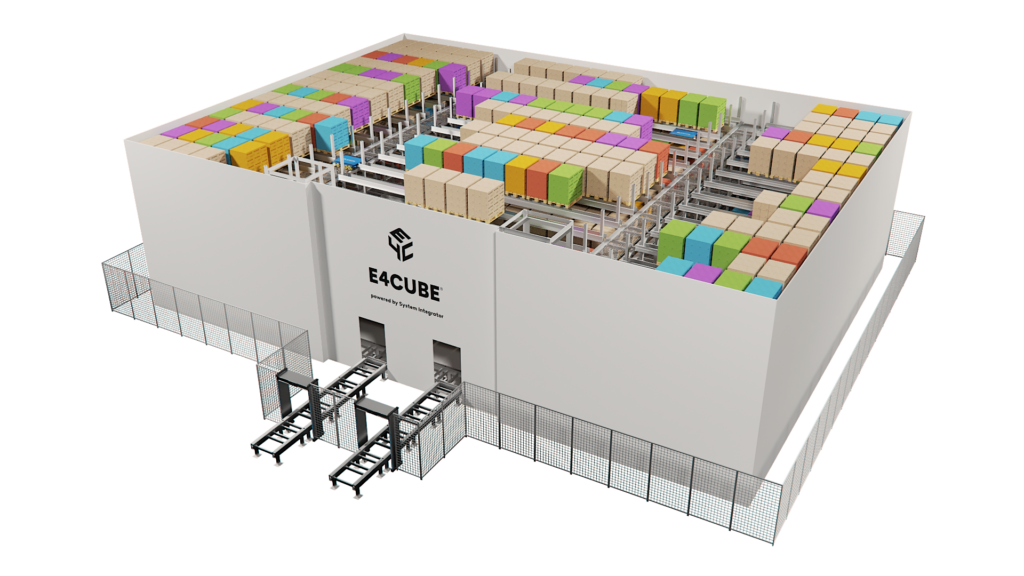
Today, modular solutions overcome this approach through scalability, allowing system performance to be progressively adjusted as the business evolves. Companies can start with a configuration tailored to their current needs and increase capacity over time by adding new pallet shuttles or additional modules as throughput volumes grow.
Scalability is therefore one of the defining features of these solutions, as it enables companies to expand the system progressively in line with business growth, without having to define a long-term strategy from the very beginning or incur costs for capacity that will only be needed years later. This approach optimizes the initial investment while preserving maximum decision-making flexibility. It is particularly advantageous for rapidly growing companies or businesses with seasonal production peaks, as it allows the warehouse to adapt continuously to changing operational requirements.
The modular nature of the system makes it possible to add new storage units alongside existing ones with minimal impact on ongoing operations. At the same time, the ability to transfer loads between different modules enables dynamic rebalancing of storage capacity, while handling devices continue to operate within their assigned modules. The result is consistently high performance, improved resource utilization, and greater operational efficiency across the entire facility.
Faster Implementation Times
When a company decides to automate its warehouse, time is often a critical factor.
New modular platforms generally offer significantly reduced delivery and installation times, which in some cases can be as short as approximately six months, making them faster to deploy than many fully customized automated warehouse projects.
This speed enables companies to achieve operational benefits within a relatively short timeframe, reducing the time required to realize a return on investment.
A Flexible Solution for the Long Term
Flexibility is not limited to system expansion alone, but also extends to the possibility of relocation.
In some cases, modular solutions can be transferred to another manufacturing or logistics site, provided that the destination area has seismic conditions equal to or less demanding than those considered in the original design, and that the required performance and throughput levels remain consistent with those specified in the original project. This feature enhances the long-term value of the investment and supports the ability to adapt to future business requirements.
Modular design also makes it possible to adapt the system to existing buildings and warehouses, maximizing the value of available infrastructure and reducing the need for extensive structural modifications. This approach enables companies to automate operations and increase storage capacity by making the best use of existing space, while maintaining relatively short implementation times and minimizing disruption to ongoing operations.
In Which Applications Does High-Density Storage Deliver the Greatest Benefits?
While these technologies can be applied across a wide range of environments, there are certain situations in which their benefits become particularly evident:
- Companies looking to improve the safety of material handling operations
- Businesses characterized by significant seasonal peaks in activity
- Warehouses used as logistics buffer storage
- High-efficiency cross-docking operations
- Projects requiring the automation of a limited number of pallets
- Companies seeking to avoid complex systems and lengthy implementation processes
- Organizations that need a solution that can be deployed within a short timeframe
- Manufacturing operations based on just-in-time principles, requiring highly reliable buffer storage areas
The Future of Logistics Lies in Intelligent Density
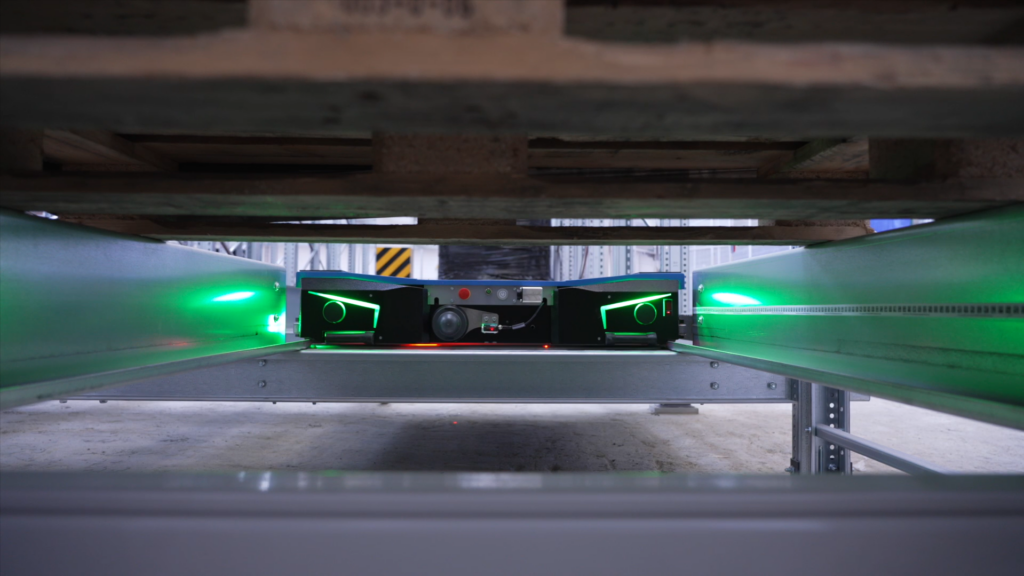
These advantages are further enhanced by seamless integration with leading enterprise management systems, high adaptability to existing warehouse facilities, and scalable performance that enables operational capacity to be increased over time simply by adding new pallet shuttles. These features make such solutions particularly attractive for companies seeking to combine efficiency, flexibility, and long-term investment sustainability.
The evolving demands of modern supply chains are transforming the very concept of the warehouse. It is no longer just about storing goods, but about intelligently managing space, time, and resources.
High-density storage solutions combine automation, modularity, and scalability to provide companies with a more flexible approach than traditional automated systems. The ability to grow progressively, reduce design complexity, and accelerate implementation timelines is making these technologies increasingly appealing to organizations that want to enhance competitiveness without sacrificing operational simplicity.

Contact Us
To request further information, fill out the form. Our sales department is available to help you with your next intralogistics automation project.