



Warehouse automation
28 August 2026
Real-Time Automated Warehouse Monitoring: Technologies, Handling Devices and Inventory Benefits
Discover how real-time automated warehouse monitoring works through pallet shuttles, handling devices, embedded sensors, IoT technologies and data analytics.
In today’s intralogistics landscape, real-time warehouse monitoring has become one of the top priorities for companies and logistics operators. The increasing complexity of supply chains, growing demand volatility, and ever-higher expectations in terms of speed and reliability require accurate and continuously updated management of operational information.
Until a few years ago, inventory monitoring was often based on periodic inspections and manual checks. Today, however, the evolution of automated warehouses makes it possible to collect data continuously, providing complete visibility into operations, equipment status, and load unit traceability.
At the core of this transformation are not only advanced software solutions such as Warehouse Management Systems (WMS) and Warehouse Control Systems (WCS), but also intelligent hardware components capable of generating, processing, and transmitting data directly from the field. In this context, handling devices and pallet shuttle systems play a key role in enabling more efficient inventory management and supporting operational decisions based on real-time information.
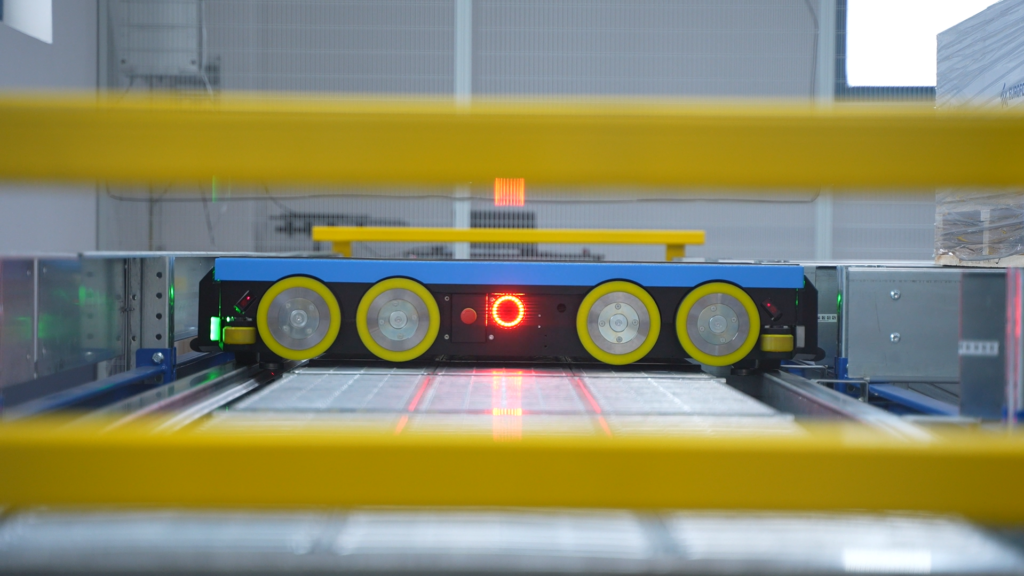
Why Real-Time Monitoring Has Become Essential for Businesses
Companies today operate in an environment characterized by highly variable workflows, demand for rapid deliveries, and a growing need to optimize available space.
According to McKinsey, the Internet of Things (IoT) enables physical objects, sensors, and information systems to be connected, transforming operational data into actionable real-time insights. In industrial and logistics environments, this approach makes it possible to monitor assets, processes, and operational flows with greater accuracy, creating the foundation for faster decision-making, better resource utilization, and improved performance.
The growing importance of these technologies is also confirmed by GSMA Intelligence in its 2024 report IoT Market Forecast to 2030: Connections by Region and Vertical, which predicts that the global number of IoT connections will reach approximately 38.7 billion by 2030, with enterprise applications expected to account for around 63% of the total. This trend highlights the increasingly central role of connected systems in industrial and logistics processes and the growing importance of real-time data availability.
In an automated warehouse, this means being able to know at any moment:
- The location of load units
- The status of storage and retrieval missions
- Resource availability
- Facility and equipment utilization
- Any operational anomalies
- Performance and productivity indicators
Having access to this information helps reduce errors, improve inventory accuracy, and enable rapid intervention when critical issues arise.
The concept of real-time inventory management stems precisely from the need to transform operational data into a continuous control tool, capable of improving both day-to-day efficiency and long-term strategic planning.
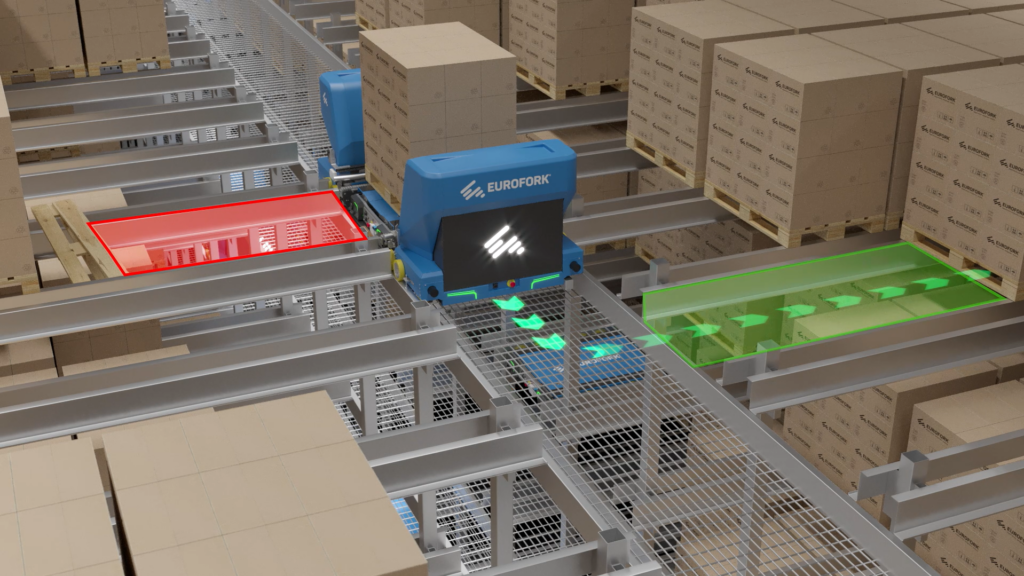
Automated Inventory and Continuous Monitoring: Two Sides of the Same Coin
When discussing warehouse automation, the concept of automated inventory management is closely linked to the ability to track the movement of goods. Every storage, handling, or retrieval operation generates information that can be integrated into management systems and updated in real time. Inventory accuracy therefore depends not only on software capabilities, but also on the quality and reliability of the data generated directly in the field.
In modern AS/RS (Automated Storage and Retrieval Systems), inventory records are updated automatically through a combination of:
- Barcode and QR code readers
- RFID systems
- Presence sensors
- Encoders and positioning systems
- Integrated telemetry within handling equipment
This digital architecture makes it possible to eliminate much of the manual work traditionally associated with inventory control, increasing operational visibility and reducing inventory discrepancies.
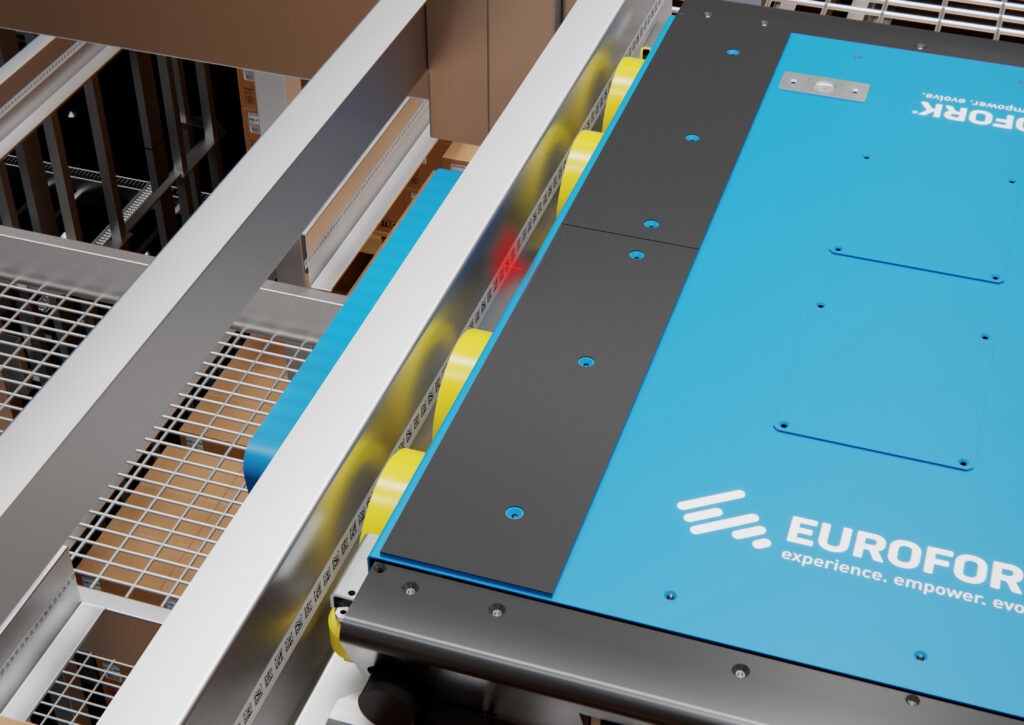
The Role of Handling Devices in Real-Time Warehouse Monitoring
When observing an automated warehouse, attention is often focused on software, dashboards, and control systems. In reality, the first and most fundamental link in the data chain is represented by handling devices, namely the equipment that physically moves load units throughout the warehouse. Telescopic forks, pallet shuttles, satellites, and transfer systems are no longer simple mechanical components. Today, they are technological platforms capable of collecting valuable operational data.
These devices are responsible for:
- Executing storage and retrieval missions
- Verifying the correct positioning of loads
- Monitoring performance and operating conditions
- Transmitting data to higher-level system layers
The quality of warehouse monitoring therefore depends directly on the ability of these components to generate reliable data. For this reason, leading system integrators no longer view handling devices merely as execution tools, but as true intelligent nodes within the logistics ecosystem.
Real-Time Inventory Management: How Data Improves Operational Visibility
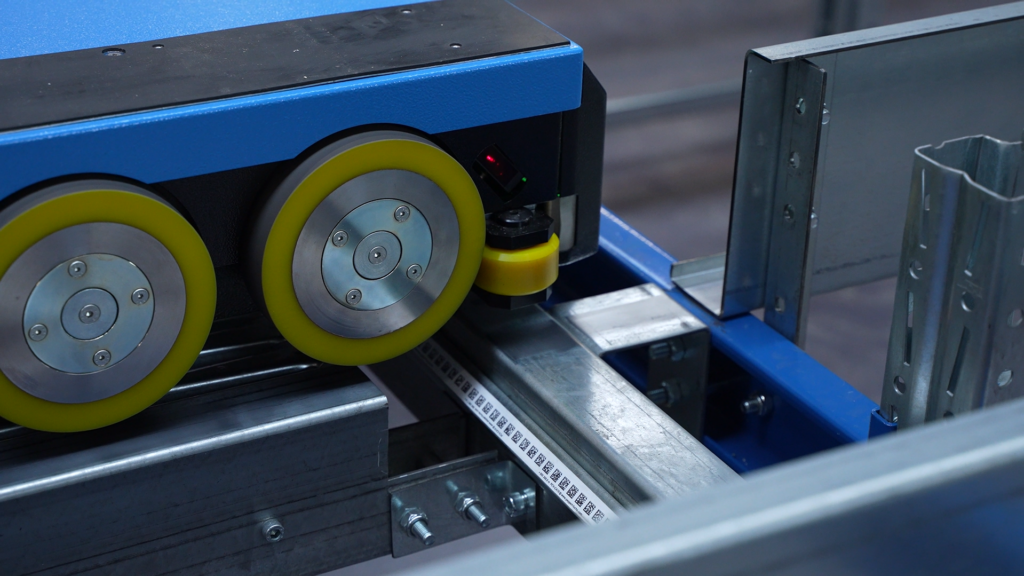
Among the technologies that have contributed most significantly to the evolution of logistics monitoring, shuttle systems stand out in particular. Solutions such as pallet shuttles make it possible to achieve high storage density while maintaining continuous control over material handling operations. For example, systems such as ESMARTSHUTTLE® are designed to ensure load unit traceability and independently manage storage and retrieval missions, contributing to complete visibility across logistics flows.
The operation of pallet shuttle systems enables the collection of data related to:
- Position
- Load status
- Execution times
- Travel path
- System utilization
- Any abnormal operating conditions
This data feeds real-time inventory management processes, improving synchronization between physical operations and information systems.
Embedded Technologies in Handling Devices: The Real Engine Behind Data Collection
One of the most significant developments in recent years has been the integration of embedded technologies directly into handling components. Sensors, communication modules, and distributed computing systems enable devices to process information locally before it is even transmitted to the central software platform.
Today, embedded technologies make it possible to monitor:
- Vibrations
- Energy consumption
- Component temperature
- Battery status
- Operating cycles
- Wear levels
- Movement accuracy
According to McKinsey, the adoption of connected sensors, IoT systems, and distributed monitoring technologies is one of the key enablers of digital operations transformation. The ability to collect data directly from physical assets improves process visibility, supports predictive maintenance, automates operational monitoring, and optimizes resource utilization across the entire operational chain.
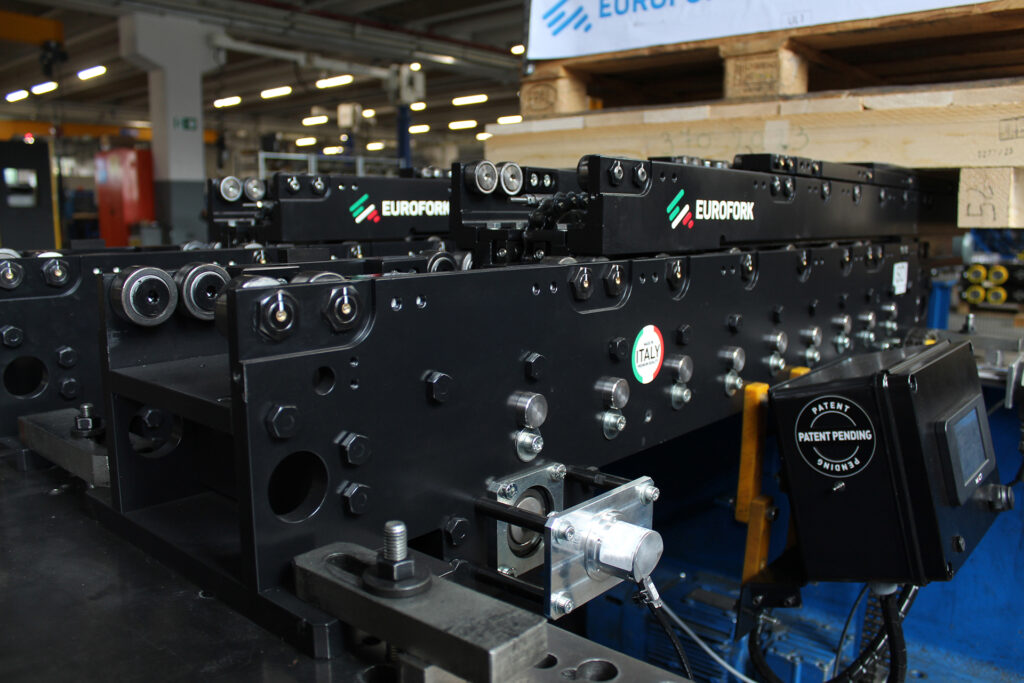
EXA Platform: When Software Becomes a Strategic Source of Data
The evolution of handling devices is driving the development of increasingly connected equipment capable of communicating with the entire logistics ecosystem. In this context, the concept developed by Eurofork through the EXA Platform takes on particular significance. This WCS platform is designed to collect, process, and enhance the value of data generated by material handling devices.
The information generated by these components can be used for:
- Performance monitoring
- Usage analysis
- Remote diagnostics
- Predictive maintenance
- Process optimization support
Data as a Strategic Asset for System Integrators
For System Integrators, data is a fundamental tool for designing, optimizing, and continuously improving logistics facilities. The availability of information collected directly from handling devices provides a much deeper understanding of system behavior and operational dynamics.
Among the main benefits are:
• Improved System Design
Historical flow analysis makes it possible to identify bottlenecks and develop more efficient warehouse layouts.
• Performance Optimization
Operational data enables storage and retrieval strategies to be fine-tuned according to actual warehouse activity.
• Advanced Diagnostics
Parameters collected from handling devices help detect anomalies and inefficiencies at an early stage.
• Continuous Improvement
Access to reliable KPIs facilitates performance measurement and the identification of improvement opportunities. In other words, the data generated by warehouse components becomes a strategic resource that helps System Integrators maintain high levels of performance throughout the entire lifecycle of a logistics system.
Technologies Enabling Real-Time Warehouse Monitoring
Data collection alone is not enough without a technological infrastructure capable of making information available, accessible, and actionable.
The main enabling technologies include:
• Industrial IoT
The Industrial Internet of Things connects sensors, devices, and software platforms, creating a continuous flow of operational information.
• Edge Computing
Edge computing enables part of the data processing to take place directly on devices, reducing response times.
• Cloud Analytics
Allow large volumes of data generated by warehouse operations to be stored, managed, and analyzed.
• Machine Learning and Artificial Intelligence
Algorithms can identify recurring patterns, support predictive activities.
• Digital Twin
An increasing number of companies are using digital warehouse models to simulate system behavior and test operational scenarios before implementation.
• RFID and Automatic Identification Systems
These technologies support accurate, up-to-date traceability of goods throughout the entire logistics chain.
Automated Inventory, Predictive Maintenance, and KPIs: Tangible Benefits
The integration of automation, data, and intelligent technologies delivers measurable results across warehouse operations.
Among the most significant benefits are:
• Greater Inventory Accuracy
Continuous inventory updates reduce errors and discrepancies, ensuring higher stock accuracy.
• Reduced Search Times
The immediate localization of load units accelerates storage operations.
• Better Space Utilization
Flow analysis enables the optimization of allocation strategies.
• Reduced Downtime
Predictive maintenance systems make it possible to intervene before critical failures occur, minimizing unplanned downtime.
• Faster Decision-Making
Managers and operators can rely on accurate, up-to-date information
• Increased Productivity
Research on the Industrial Internet of Things and Industry 4.0 highlights how real-time data availability contributes to higher operational efficiency, better asset utilization, and improved process quality. Furthermore, the growth of enterprise IoT applications, which according to GSMA Intelligence are expected to account for nearly two-thirds of all global IoT connections by 2030, confirms the increasing adoption of operating models based on continuous monitoring, automation, and advanced data analytics.
The Future of Intralogistics Monitoring Lies in Intelligent Solutions
The digital transformation of warehouses is not only about increasingly sophisticated software. It is about the ability of the entire infrastructure to generate, share information. Handling devices are becoming true distributed sensors throughout the logistics process, providing levels of visibility and control that would have been unimaginable just a few years ago.
Today, pallet shuttles, telescopic forks, and advanced handling systems integrate embedded technologies, advanced monitoring capabilities, and data collection platforms that enable System Integrators to design facilities that are more efficient, reliable, and scalable. In this scenario, solutions such as automated pallet shuttles and the data platforms developed by Eurofork demonstrate that innovation lies not only in the movement of goods, but above all in the ability to transform every operation into valuable information. It is precisely this convergence of automation, connectivity, and data analytics that makes effective real-time warehouse monitoring possible.

Contact Us
To request further information, fill out the form. Our sales department is available to help you with your next intralogistics automation project.