



Warehouse automation
27 July 2026
Multi-deep and multi-level storage: how to maximize the capacity of automated pallet warehouses
How multi-deep and multi-level storage systems increase warehouse density and maximize the use of available space.
Warehouse space optimization is currently one of the main challenges facing companies, distribution centers, and industrial operators. Rising real estate costs, the growth of e-commerce, and the need to handle ever-increasing pallet volumes are driving businesses toward increasingly efficient storage solutions. In this context, multi-depth and multi-level storage has proven to be one of the most effective technologies for increasing warehouse storage density and improving operational performance.
What is multi-deep storage?
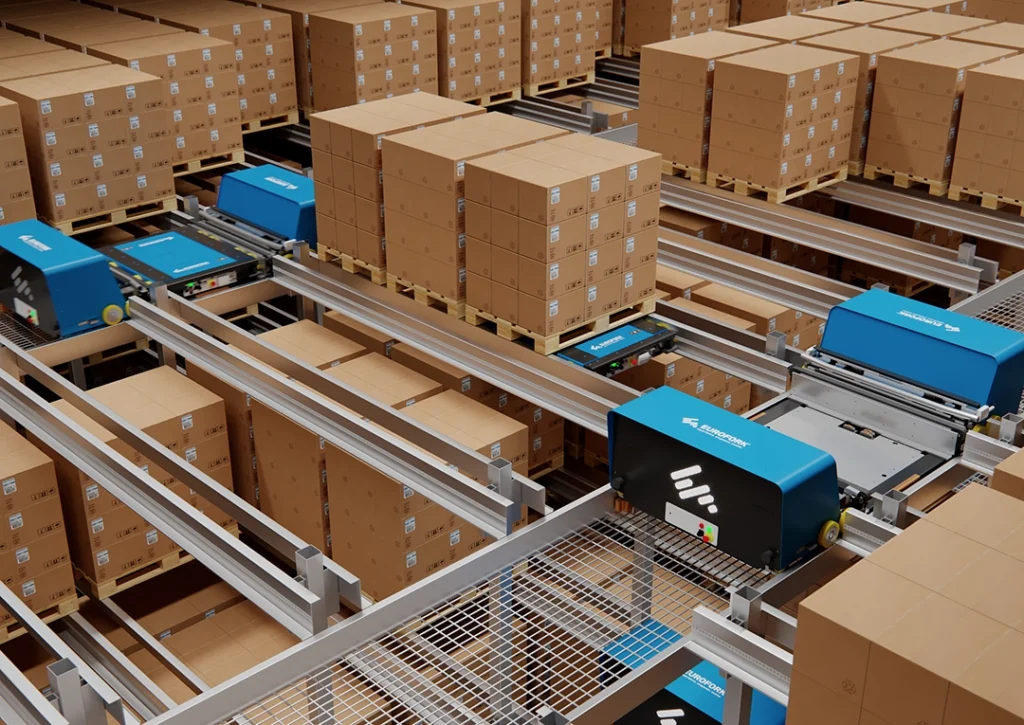
Multi-deep storage is a storage system that allows multiple pallets to be stored in depth within the same storage lane. Unlike traditional racking systems, where each pallet is directly accessible from the operating aisle, multi-deep systems make optimal use of the available warehouse volume by reducing the number of aisles required.
The main objective is to significantly increase storage capacity without expanding the warehouse footprint. This solution is particularly beneficial for companies that handle large quantities of SKUs with similar turnover rates or high volumes of the same product.
The multi-level warehouse concept
Alongside storage depth, another key factor is vertical development. A multi-level warehouse takes advantage of the building’s height to multiply the number of available storage locations.
By using stacker cranes, automated pallet shuttles, lifters, and high-performance material handling system, it is possible to build structures that reach several tens of meters in height, maximizing every available cubic meter of space.
The integration of vertical development and deep-lane storage creates a highly efficient configuration known as multi-level, multi-deep pallet storage, which is becoming increasingly common in next-generation automated warehouses.
Multi-deep storage system with pallet shuttle
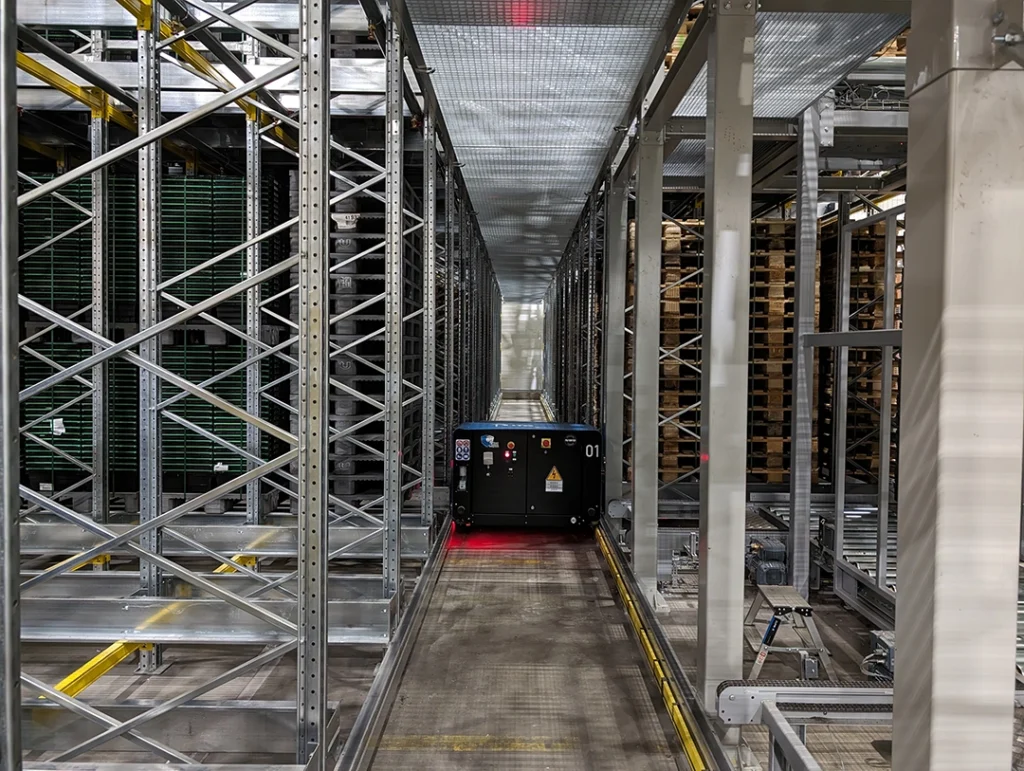
Among the most advanced technologies currently available on the market, the multi-deep storage system with pallet shuttle is an extremely effective solution for increasing warehouse density while maintaining high operational speeds.
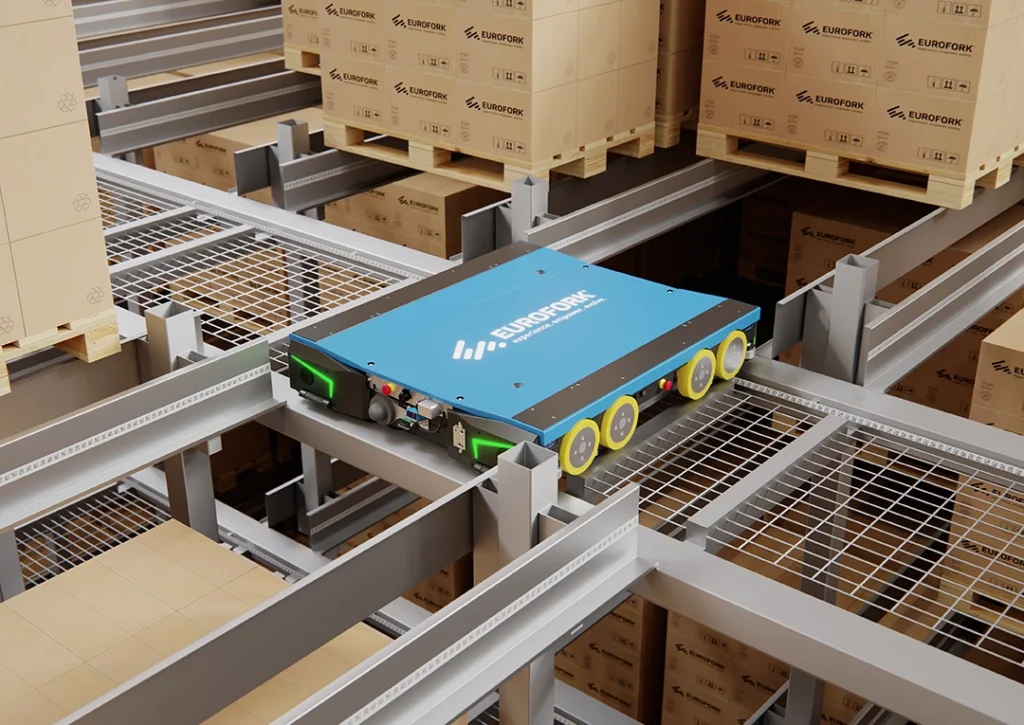
The pallet shuttle is a motorized cart that moves autonomously within storage lanes and channel, transferring pallets deep into the racking system without requiring forklifts to enter the aisles.
In automated warehouses, this technology can be integrated with:
- Pallet stacker-cranes
- Vertical lifts
- WMS and ERP management systems
- Real-time control and monitoring software
The result is a highly automated system capable of delivering:
- High storage capacity
- Reduced handling times
- Improved operational safety
- Lower operating costs
- Optimal use of available warehouse space
Multi-deep warehouse storage system: operational benefits
The adoption of a multi-depth warehouse storage system offers numerous advantages compared to traditional storage configurations.
o Increased storage capacity
The combination of storage depth and vertical development makes it possible to significantly increase the number of pallets that can be stored within the same facility.
o Reduced building costs
By increasing storage density, companies can avoid costly warehouse expansions and make themost of their existing space.
o Automation and higher productivity
Integration with automated systems reduces unnecessary movements and increases the speed of storage and retrieval operations.
o Enhanced safety
Automated material handling minimizes human intervention in the most critical operational areas, reducing the risk of accidents and damage to both goods and personnel.
o Future Scalability
Multi-deep storage systems are designed to adapt to evolving logistics requirements and can be expanded over time to accommodate changing business needs and growing volumes.
Multi-level and Multi-Deep Storage: The Solution for High-Density Warehouses
Multi-level and multi-deep storage configurations are now considered one of the most effective answers to the challenges of modern logistics. By combining multi-level racking systems, deep-lane storage channels, and automated material handling technologies, these solutions enable levels of efficiency that are impossible to achieve with conventional storage systems.
The industries that benefit most from these applications include:
- Food industry
- Beverage industry
- Third-party logistics (3PL)
- Large-scale retail distribution
- Automotive
- Manufacturing
- E-commerce
- Retail
In all these sectors, order fulfillment speed and space optimization are key factors in maintaining a high level of competitiveness.
Conclusion
Multi-deep and multi-level storage provides a practical solution to the growing need for space optimization and automation in logistics operations. The combination of vertical structures, high-density storage systems, and technologies such as the Pallet Shuttle makes it possible to create warehouses that are highly efficient, safe, and scalable.
For companies looking to increase storage capacity without expanding the existing footprint, multi-deep and multi-level storage systems are now among the most strategic and competitive solutions for meeting the challenges of today’s supply chain.able inventory management.
Contact Us
To request further information, fill out the form. Our sales department is available to help you with your next intralogistics automation project.