



Warehouse automation
4 August 2026
What is a WCS in an automated warehouse: a complete guide to the Warehouse Control System
What is WCS in an automated warehouse? What are its functions and what is the difference between WCS and WMS?
In today’s intralogistics world, automation has become a key factor in improving productivity, accuracy, and flow management capabilities. Behind every efficient automated warehouse, there are not only pallet shuttles, stacker cranes, AGVs, and intelligent material handling systems, but also a crucial software component: the WCS (Warehouse Control System).
In this guide, we take an in-depth look at the role of the Warehouse Control System and its contribution to the efficiency of modern automated warehouses.
WCS in an automated warehouse: what is it?
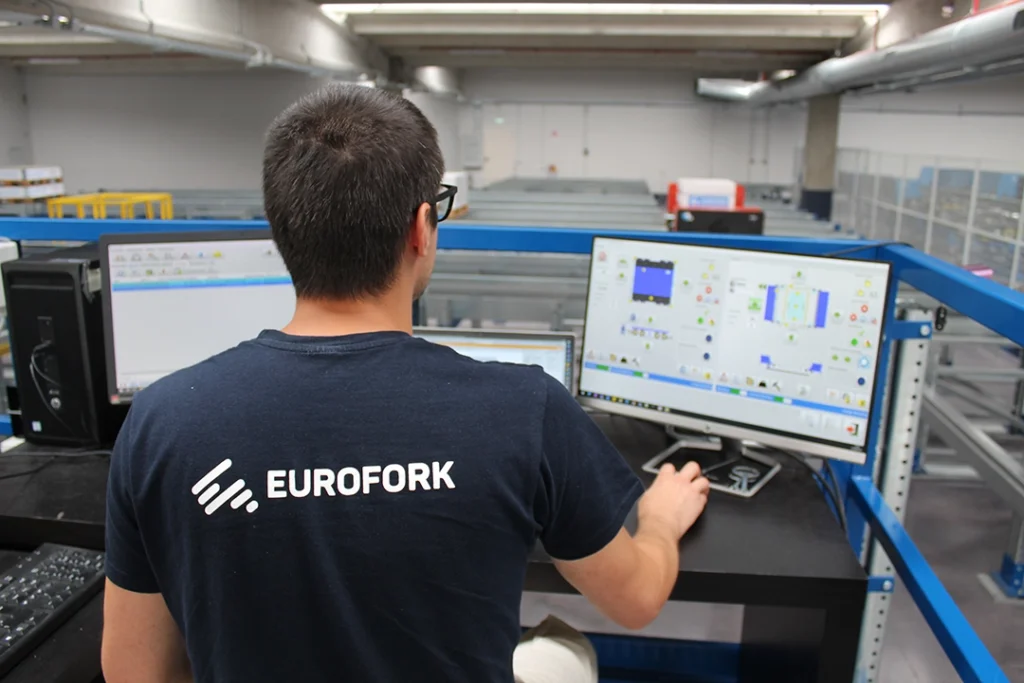
The WCS (Warehouse Control System) is the software responsible for controlling and coordinating the automated equipment within a warehouse in real time. Its role is to translate operational instructions received from higher-level systems into concrete actions performed by material handling devices.
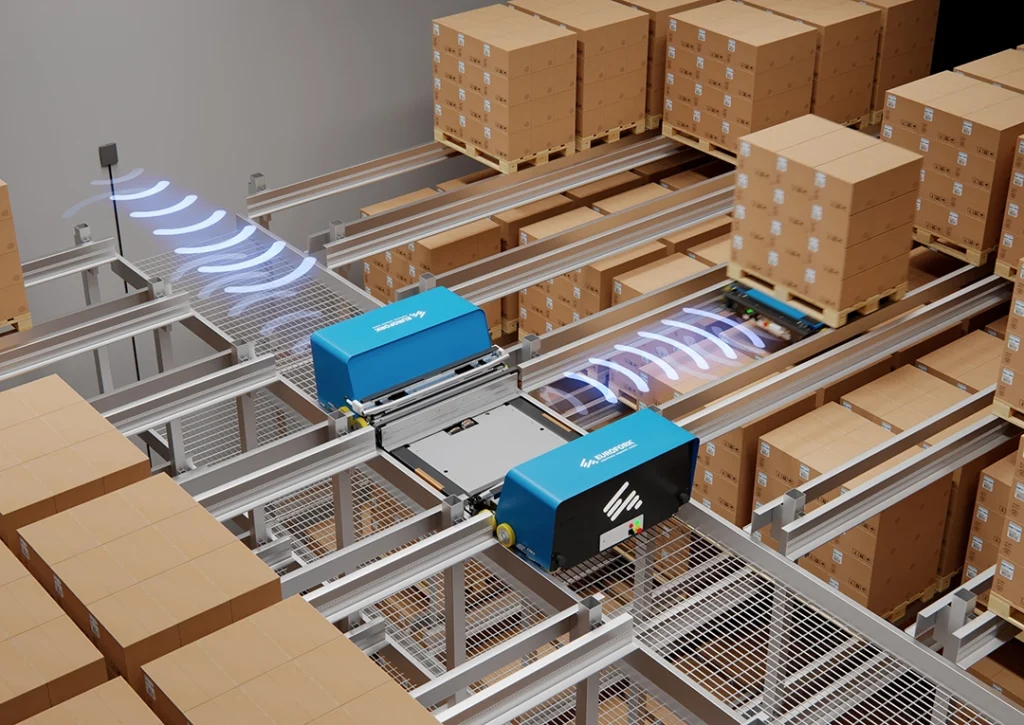
In practice, the WCS acts as the link between the warehouse’s logical management layer and the physical world of automation. It communicates directly with equipment such as:
- Pallet shuttles
- Stacker cranes
- Conveyor systems
- Sorters
- AGVs and AMRs
- AS/RS (Automated Storage and Retrieval Systems)
- Automated picking stations
Without a Warehouse Control System, each machine would operate as an isolated unit, making it difficult to maintain a continuous, coordinated, and optimized flow of goods throughout the warehouse.
How does a warehouse control system work?
A WCS software receives tasks and information from higher-level systems, such as the WMS or the company’s ERP, and translates them into operational instructions for automated equipment.
Its main functions include:
- Managing storage and retrieval tasks
- Assigning jobs to available machines
- Optimizing travel routes
- Real-time monitoring of equipment
- Managing operational priorities
- Preventing congestion and collisions
- Predictive maintenance
- Managing loading and unloading docks
- Interfacing with production systems
- Handling alarms, exceptions, and anomalies
Thanks to these capabilities, the WCS ensures that every pallet, container, or package follows the most efficient path through the warehouse.
Difference between WCS and WMS in warehouse management
One of the most common questions concerns the difference between a WCS and a WMS.
Although these two systems are often confused, they perform distinct yet complementary roles within warehouse operations.
o WMS (Warehouse Management System)
A WMS is the system responsible for managing the warehouse from a logistical and administrative perspective. Its functions include:
- Inventory management
- Location management
- Batch and serial number tracking
- Goods receiving
- Picking operations
- Shipping management
- Traceability
The WMS therefore determines the operations that need to be carried out.
o WCS (Warehouse Control System)
The WCS, on the other hand, controls the automation and coordinates the warehouse equipment. Its role is to determine how to carry out the activities defined by the WMS, orchestrating the movements of machines and automated systems.
In summary, the WMS manages the warehouse, while the WCS manages the movement of goods through automation.
Warehouse Control System: what benefits does it offer?
Implementing a WCS (Warehouse Control System) software solution delivers significant benefits, particularly in highly automated warehouse environments.
o Increased operational efficiency
The system simultaneously coordinates all automated resources to improve overall performance, reducing downtime and bottlenecks.
o Workflow optimisation
Tasks are dynamically assigned based on the current status of the facility, workload distribution, and operational priorities.
o Real-time control
Continuous monitoring of equipment enables immediate detection of anomalies and rapid corrective action.
o Scalability
A Warehouse Control System makes it possible to integrate new technologies or expand the facility without disrupting the existing operational architecture.
o Error reduction
Coordinated automation minimizes the risk of human error and increases the reliability of logistics operations.
WCS Warehouse Automation Software: the heart of automated warehouses
In automated warehouses, the WCS (Warehouse Control System) represents the true operational core of automation.
Without an advanced control system, it would be impossible to efficiently coordinate dozens or even hundreds of devices operating simultaneously.
Technological advancements are also driving Warehouse Control Systems toward increasingly sophisticated capabilities, including:
- Optimization algorithms
- Predictive maintenance
- Data-driven monitoring
- Digital simulation through Digital Twins
- AI integration
Conclusion
The Warehouse Control System (WCS) is an essential component of any modern automated warehouse. Thanks to its ability to coordinate automated equipment in real time, it enables greater efficiency, reduces errors, and maximizes the benefits of automation.
If the WMS is the brain that plans and manages logistics activities, the WCS is the system that translates those decisions into synchronized physical movements, ensuring that every warehouse component operates as part of a single integrated system.
In an environment increasingly driven by automation, digitalization, and Industry 4.0, the WCS is set to become a strategic asset for maintaining and enhancing business competitiveness.

Contact Us
To request further information, fill out the form. Our sales department is available to help you with your next intralogistics automation project.